How to Stop Dog Barking
Hello, two-leggers.
Answer First
Excessive barking has one root cause: something your dog needs to communicate, and no better way to say it. The most effective solutions match the method to the barking type — territorial, demand, boredom, or anxiety each need a different approach. Start today by identifying which type you are dealing with, then stop rewarding the bark with attention. If barking is severe, constant, or started suddenly in an older dog, consult your veterinarian to rule out medical causes first.
Now let me tell you how I know all of this — because I was, for a significant portion of my youth, the problem.
The Problem, Which Was Me
I was somewhere between eight months and a year and a half old, and I was magnificent in all the wrong ways. The energy was boundless. The opinions were numerous. And the volume — two-leggers, the volume — was considerable.
The Therapist tried everything. I know this because I watched her try it, from my position as both subject and reluctant scholar. She tried saying “shh” in a firm voice. She tried saying “shh” in a gentle voice. She tried saying “NO” with great conviction. She tried ignoring me, which lasted approximately forty-five seconds before I escalated the research. She tried — and I mention this with the academic neutrality it deserves — a water spray bottle, which I found startling and also completely unrelated to whatever I had been barking about.
None of it worked. Not immediately. Not consistently.
What eventually worked was something neither of us expected, and I will get to that. But first — as any responsible professor must — the diagnosis.
How to Stop Dog Barking — Quick Diagnosis
Before reaching for a solution, identify the type. Wrong method for wrong type wastes everyone’s time.
- If your dog barks at the window, fence, or door when something passes → territorial or alarm barking
- If your dog barks at you directly — at mealtimes, when you sit down, when you stop playing → demand barking
- If your dog barks only when left alone, or barks while pacing and panting → anxiety barking
- If your dog barks at everything, constantly, with no clear trigger → boredom or under-stimulation
- If barking started suddenly in an older dog with no obvious cause → possible medical issue, consult your vet
Keep your type in mind. Every section below maps to it.
What Doesn’t Work — And Why Alfred Knows
The single most useful thing I can tell you about stopping dog barking is what not to do — because the wrong response doesn’t just fail, it actively makes things worse.
The Therapist’s early attempts were well-intentioned and largely counterproductive, and I say this with great affection and the benefit of hindsight. When she raised her voice in response to my barking, I did not think: ah, disapproval, I shall cease. I thought: she is also barking. We are barking together. This is a bonding experience. The volume in the household increased. This was not the goal.
Punishment — shouting, spray bottles, shock collars, anything fear or pain-based — has a specific and predictable failure mode. It may suppress the barking in the moment. It does not address why the barking happened. The dog learns to associate the punishment with your presence, or with the trigger, or sometimes with nothing identifiable at all. The underlying need — the thing the dog was trying to communicate — is still there, unaddressed, building pressure for the next eruption.
Have you ever had a manager who responded to every problem you raised by telling you to be quiet? You stopped raising the problem out loud. You did not stop having the problem. That is your dog on punishment-based bark training. The communication went underground. The need did not.
The other thing that reliably fails is inconsistency. Ignoring demand barking three times and then giving in on the fourth — because the fourth time was particularly loud and you were tired — teaches the dog that persistence works. Specifically, it teaches that more barking works. You have now trained a dog who barks harder and longer before giving up, because giving up has previously been the wrong strategy.
The method that doesn’t work is not a specific technique. It is any response that accidentally rewards the bark, punishes without teaching, or addresses the symptom while ignoring the cause.
Why Your Dog Is Still Barking
Most dogs who bark excessively are not doing so out of spite, stubbornness, or a personal campaign against your sanity. They are doing it because it has, at some point, worked — and because the training to replace it has not yet been consistent enough or long enough to take hold.
There is a phenomenon I find particularly important for two-leggers to understand, and it is called the extinction burst. When you stop rewarding a behavior — when you commit to not responding to demand barking, for instance — the behavior does not immediately decrease. It first gets worse. The dog, confronted with a strategy that is suddenly not working, does the logical thing: tries harder. Barks louder. Barks longer. Barks with renewed conviction.
This is the moment most training attempts collapse. The human, faced with escalating noise, concludes that ignoring the barking is not working and gives in. What they have actually done is train the dog that the louder, longer version of the bark is the one that succeeds. The next extinction attempt will require surviving an even larger burst.
You have done this too. Your internet connection drops mid-video. You click the refresh button once. Nothing. You click it again. Nothing. You click it four more times in rapid succession, as if volume of clicking changes the underlying infrastructure. That is an extinction burst. You knew, rationally, that clicking more would not help. The instinct to try harder before giving up is deeply mammalian.
The solution is not to white-knuckle through the burst alone. It is to understand that the burst means the training is working — the old strategy is being tested and found unreliable — and that consistency on the other side of it is what creates the new behavior.
How to Stop Dog Barking — Methods That Actually Work
This is the section where type matters, so keep your Quick Diagnosis result in hand.
Territorial and Alarm Barking
The dog is doing its job. This is the important thing to understand first — a dog who alerts to movement at the boundary is not malfunctioning. Management here means two things: reducing exposure to the trigger where possible (moving furniture away from windows, using frosted film on lower glass panels), and teaching an alternative behavior.
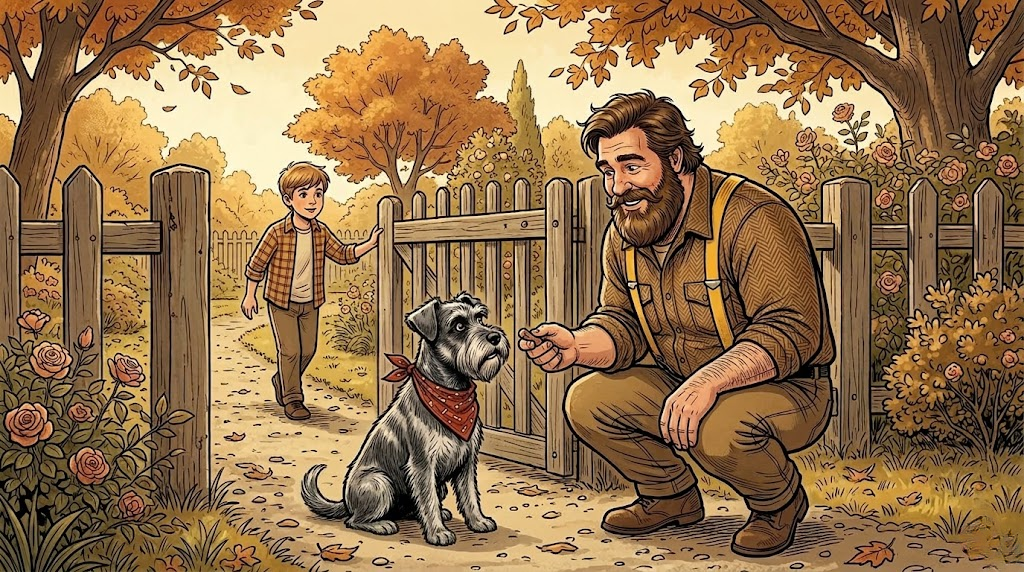
The “quiet” command works through a counterintuitive sequence: you let the dog bark two or three times, say “quiet” once in a calm voice, then redirect to an incompatible behavior — sit, go to your place, find it. When quiet, reward. The dog learns that alerting is acknowledged and that quiet on cue earns something good. This took The Therapist and me approximately three weeks of consistent practice. I will not pretend the three weeks were peaceful. Ham and the Big Guy have apparently made similar progress. Ham is — and I mean this as a compliment — a surprisingly disciplined student, given his background. The Big Guy deserves credit too. Though I suspect Ham would insist the credit is entirely his own.
Demand Barking
This one is pure extinction, and it requires the consistency I described above. Every instance of demand barking that receives any response — attention, eye contact, telling the dog to stop, getting up — rewards the bark. The only path is complete non-response until quiet, followed immediately by rewarding the quiet.

The timing matters enormously. You are not rewarding “stopped barking after two minutes.” You are rewarding the moment of silence itself. A treat, a calm word, a brief engagement — immediately when the noise stops. The dog learns that quiet is the behavior that works, not barking.
Boredom and Under-Stimulation
This is the easiest type to address and the most commonly misdiagnosed. A dog who barks at everything, constantly, with diffuse unfocused energy, is almost always under-exercised and under-mentally-stimulated. More physical exercise helps. Puzzle feeders, sniff walks, training sessions that require concentration — these drain mental energy in a way that a run around the block does not.
When choosing enrichment tools, look for items that match your dog’s size and chewing style — what occupies a small terrier for twenty minutes may last a large breed approximately forty-five seconds. Snuffle mats, Kongs, lick mats, and treat-dispensing toys are all worth trying to find what holds your dog’s attention longest.
Anxiety Barking
This is the type where treating the symptom — the barking — gets you nowhere. The bark is not the problem. The anxiety is the problem. Reducing anxiety barking requires addressing what is causing the anxiety: separation, specific triggers, a nervous temperament that needs systematic desensitization.
I have written about fear and anxiety in dogs at some length, and the short version is: you cannot punish or ignore a dog out of anxiety. You can only build safety, reduce triggers where possible, and increase the dog’s confidence through positive exposure over time. For significant anxiety, a certified behaviorist is genuinely worth the investment.
When Training Is Not Enough
There are situations where the most diligent application of correct technique will not resolve the barking, and it is important to know what they are.
Medical causes are more common than most people expect. Pain causes dogs to vocalize. Cognitive dysfunction in older dogs — the canine equivalent of dementia — can cause nighttime barking with no apparent trigger. Thyroid issues, neurological changes, hearing loss that makes the world startle them more easily — all of these can manifest as increased barking. If barking started suddenly, changed character, or appears in an older dog who was previously quiet, your veterinarian should be the first call, not a trainer.
Separation anxiety is its own category and deserves its own article, which it will get. The short version: separation anxiety barking is not a training problem in the conventional sense. It is a panic response. The dog is not misbehaving. The dog is terrified. Treating it requires a specific desensitization protocol, significant patience, and often the guidance of a veterinary behaviorist.
And then there are dogs for whom the barking is genuinely breed-typical and high-magnitude — Nordic breeds, many terriers, some herding breeds — where “stopping” the barking entirely is neither realistic nor fair. The goal in these cases is management and channeling, not silence.
The Thing Nobody Tells You About Quiet Dogs
By the time The Therapist and I had worked through the barking — and we did work through it, eventually, together, through a process that involved considerable patience on her part and considerable sulking on mine — I understood something that I think is worth saying directly.
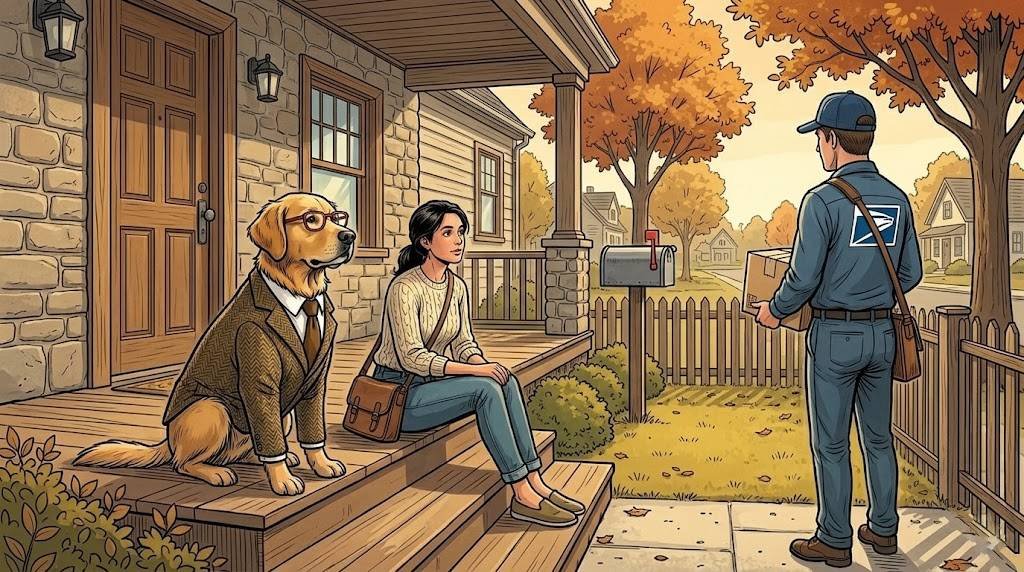
The goal was never silence. The goal was communication.
What The Therapist wanted was not a dog who never made a sound. She wanted a dog who could tell her something was at the door without dismantling her concentration for forty minutes. She wanted a dog who could express needs without demanding them at maximum volume. She wanted, essentially, what any two-leggers want from anyone they live with: to be heard without being overwhelmed.
And I — once I understood that there were other ways to be heard, that a bark acknowledged and then a quiet rewarded was a conversation rather than a performance — found that I had less to prove.
The barking did not stop entirely. I remain, professionally, a dog. But it became purposeful. It became communication. And that, two-leggers, is the only version of “how to stop dog barking” that actually works — not stopping it, but translating it into something both of you can live with.
The Therapist figured that out before I did. She usually does.
Professor Alfred
Reformed Excessive Barker, Mostly — Still Maintaining Strong Opinions About Squirrels