How to Prepare Your Home for a New Dog
Hello, two-leggers.
Answer First
Preparing your home for a new dog means two things: removing what could hurt them, and setting up what helps them settle. The shopping comes third. A dog arriving into a hazard-free space with a clear resting area, consistent boundaries, and a predictable layout will find its footing faster than a dog arriving into a beautifully equipped home that has not been thought through. Start with what to remove. Then decide what to set up. Then buy what the first 48 hours actually require.
Before You Buy Anything, Remove Things
The most useful preparation is not acquisition. It is subtraction.
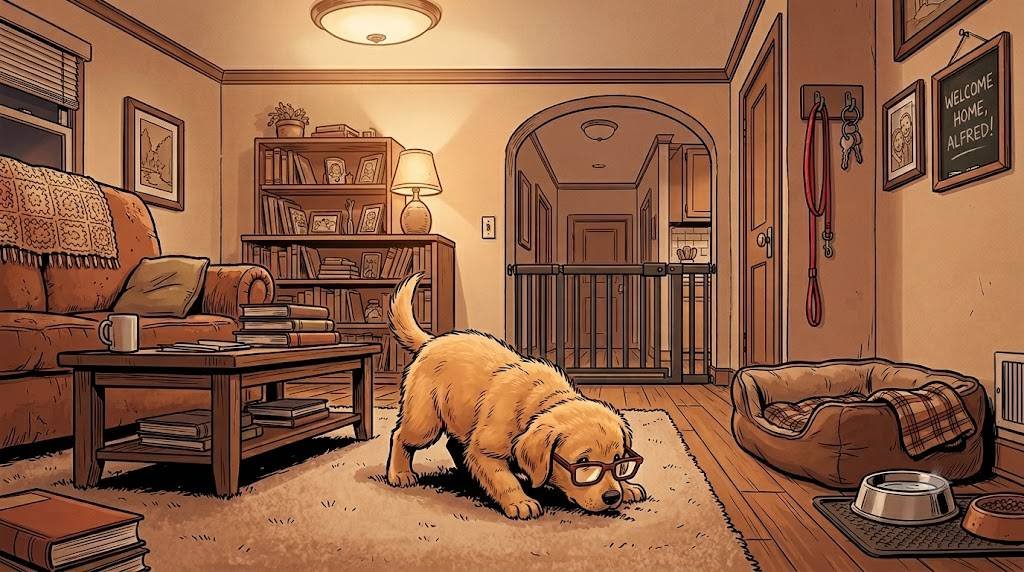
A new dog — regardless of age — arrives in an unfamiliar space and begins investigating immediately. The nose goes first, then the mouth, then the paws. What is at floor level, what is accessible on low shelves, what hangs within reach of a curious animal who has not yet learned your household’s logic — all of it is fair game until demonstrated otherwise.
The categories that cause the most problems: loose cables and chargers at floor level, toxic houseplants within reach, cleaning products in accessible under-sink cupboards, small objects that can be swallowed, and unsecured trash cans. Trash cans, in particular, are underestimated. A dog who has learned that trash cans contain interesting things will test every trash can in the house until proven wrong.
I once treated The Therapist’s diploma as a chewable academic document, which is one reason I support removing important papers before the dog arrives.
If your dog eats a plant or household item and you are unsure whether it is safe, call your veterinarian or a pet poison helpline. Do not wait to see what happens.
Think of it like moving into a new apartment and checking what the previous tenant left behind before unpacking your own boxes. The audit comes first. The arrangement comes after.
Walk every room at dog height before the dog arrives. What you notice from down there is different from what you notice standing up.
Quick Diagnosis — which situation are you preparing for?
- Puppy coming home → prioritize cables, small objects, potty schedule, and easy-clean zones.
- Adult rescue with unknown history → start with fewer accessible rooms and more observation before expanding.
- Apartment dog → focus on safe resting space, elevator and hallway routine, and noise exposure.
- House with yard → check fencing, gate latches, toxic plants, and standing water before the first day.
- First-time owner → buy fewer things, prepare better zones. The dog needs clarity more than equipment.
- Multiple people in the household → agree on rules before the dog arrives. Inconsistency in the first week costs more time than almost anything else.
What to Have Ready Before the Dog Arrives
The first 48 hours have specific requirements. Everything else can wait.
What you actually need: a collar with an ID tag, a leash, a bed or crate if you are using one, food and water bowls, the food your dog is currently eating, and enzymatic cleaner. That last item is the most underrated on the list. Accidents can happen in the first days, even with adult dogs and dogs who were previously house-trained — a new environment disrupts even well-established routines. Standard cleaners mask the smell to human noses. Enzymatic cleaner breaks down the compounds that draw a dog back to the same spot. Buy it before you need it.
Beyond that, resist the impulse to over-buy. You do not yet know this dog’s preferences, habits, or what kind of chewer they are. A full crate setup purchased before you know your dog’s needs can be a gamble. Buy what the first 48 hours require. Let the dog tell you the rest.
This is exactly like packing a hospital bag: you bring what the first two days actually need, not everything you will eventually want at home.
Get the essentials and the enzymatic cleaner. Everything else can follow once you know the dog.
The Setup Your Dog Can Actually Use
Where you put things matters as much as what you buy.
A dog bed placed in a high-traffic corridor is technically a bed. It is not a resting place. The resting area should be somewhere the dog can observe the room without being in the middle of it — against a wall, in a corner, out of the main line of movement. Dogs rest better when they can see what is happening without being in the flow of it.
Water should be accessible and in a consistent location from day one. Dogs learn their environment through repetition. Moving the water bowl while the dog is still mapping the space adds unnecessary confusion to an already unfamiliar situation.
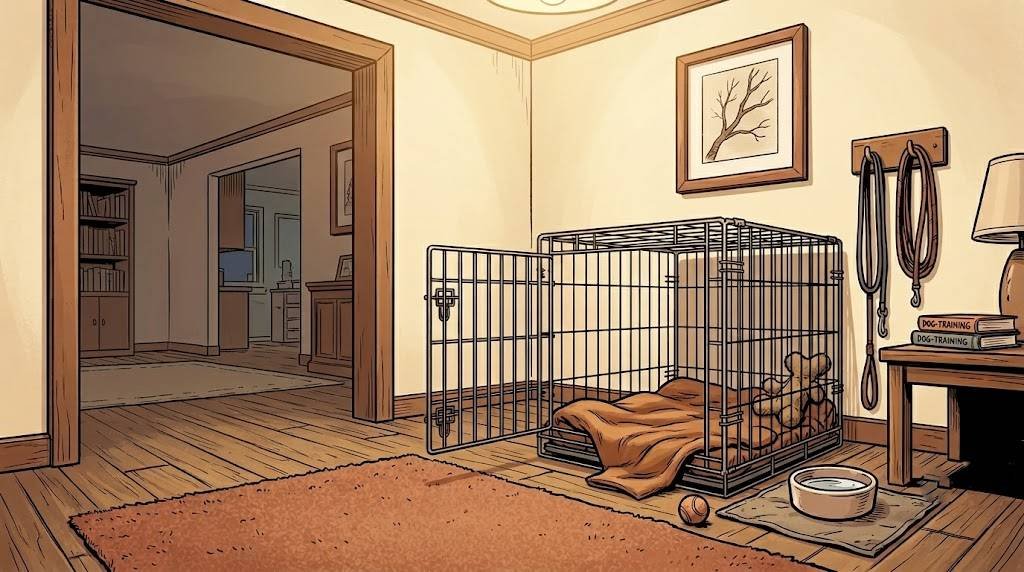
If you are using a crate, place it where the dog can still hear and smell the household — a corner of the living room rather than an isolated room. The goal early on is a defined space that feels safe, not separated.
Think of setting up a desk in a new office: the location affects whether you can actually work there, not just whether it looks right from across the room.
Set up the resting area before the dog arrives. Location and predictability matter more than how it looks.
Spaces, Boundaries, and Why They Matter Early
Not every room needs to be accessible from day one. In fact, limiting space early is one of the more useful things you can do for a new dog.
A dog given access to an entire house immediately has a large, unmapped territory to manage. That is not freedom — it is a significant cognitive load for an animal still learning where the exits are, where the safe spots are, and what the household’s patterns look like. Starting with a smaller, defined space and expanding access gradually as the dog settles is easier on the dog than it sounds restrictive to the owner.
Baby gates are useful here — not as punishment, but as information. They tell the dog where the current edges are. A dog who knows where the edges are can relax inside them.
This is similar to starting a new job and not having access to every system on day one. Access expands as familiarity and trust develop. The structure is not a limit on the relationship — it is what makes the relationship navigable while it is still being built.
Limit access early and expand it gradually. The dog will settle faster in a smaller known space than in a large unknown one.
The Kitchen and Bathroom Problem
These two rooms are responsible for a disproportionate number of household incidents, and they are the rooms most owners forget to audit.
In the kitchen: trash cans within reach, cleaning products in low cupboards, human food accessible on low counters or tables, and anything stored at floor level that smells interesting. A dog who discovers the bin once will check it for the rest of its life.
In the bathroom: cleaning products, medications at any accessible level, and the toilet lid — particularly relevant for dogs who drink from standing water. Closed by default. Simple habit, no cost.
A person childproofing a kitchen for the first time is consistently surprised by how many things at low height turn out to be hazardous when you actually get down and look. The same audit applies here.
Check both rooms at floor level before the dog arrives. Close what can be closed. Relocate what cannot.
Outside Space, If You Have It
If you have a yard or garden, check it before the dog arrives — not after.
The specific things to look for: gaps in fencing that are larger than they appear, gate latches that a determined nose or paw could work open, toxic plants at dog height, and standing water in containers the dog could access. A yard that looks secure from the back door is not always secure from the perspective of an animal actively looking for the edges.
This is like checking a rental property’s outdoor space before signing — you are looking for what could go wrong, not just confirming it looks usable.
Walk the perimeter and check every gate latch before the dog’s first day outside.
Alfred’s Rule
The dog will tell you what you missed.
In the first week, you will discover the one cable you forgot, the plant you assumed was out of reach, the trash can you thought was heavy enough, the room boundary you did not quite establish. This is normal. Preparation reduces the number of discoveries — it does not eliminate them.
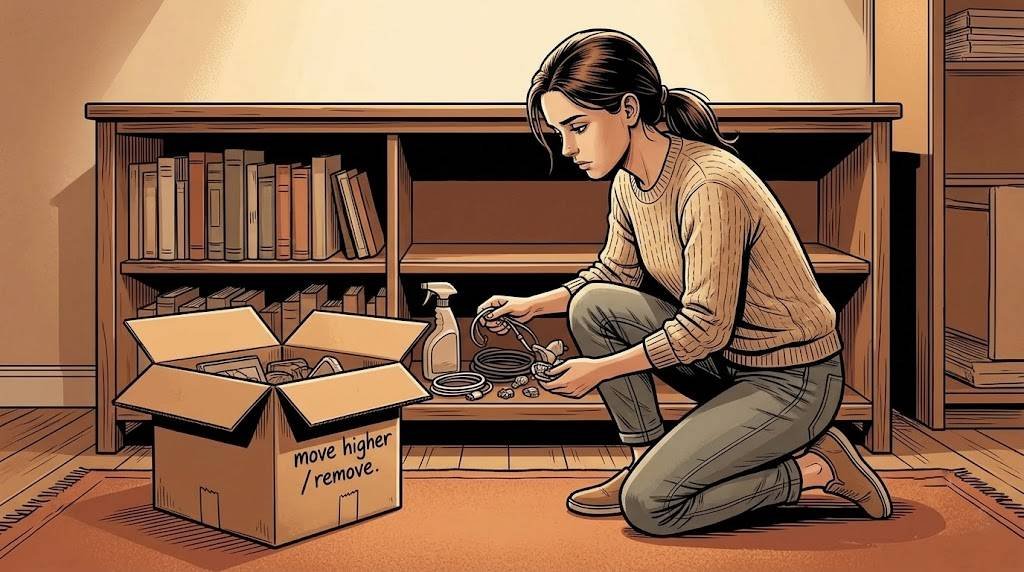
What preparation actually buys you is a calmer first week. A dog arriving into a space that has been thought through has fewer opportunities to get into trouble while still learning the rules.
The full detail of how to handle that first week is in First Week With a New Dog — and if you have not yet arranged the vet visit, New Dog Vet Checklist covers what needs to happen in the first days. If you are still at the decision stage, How to Choose the Right Dog is where the framework lives.
Prepare for the obvious, stay flexible for the rest, and let the dog show you what the space still needs.
Professor Alfred
Domestically Reformed, Mostly
FAQ
What do I need before bringing a dog home?
The essentials for the first 48 hours: collar with ID tag, leash, bed or crate, food and water bowls, the food the dog is currently eating, and enzymatic cleaner. Everything else can follow once you know the dog.
How do I dog-proof my house?
Walk every room at floor level and remove or secure loose cables, toxic plants, cleaning products in low cupboards, small swallowable objects, and unsecured trash cans. Then check the kitchen and bathroom specifically. Then check any outdoor space.
Should I limit where my dog can go at first?
Yes. Starting with a smaller defined area and expanding gradually helps the dog settle faster. Full access to the whole house from day one is harder on the dog than it sounds generous to the owner.
What if my dog eats something toxic that I missed?
Call your veterinarian or a pet poison helpline. Do not wait for symptoms.