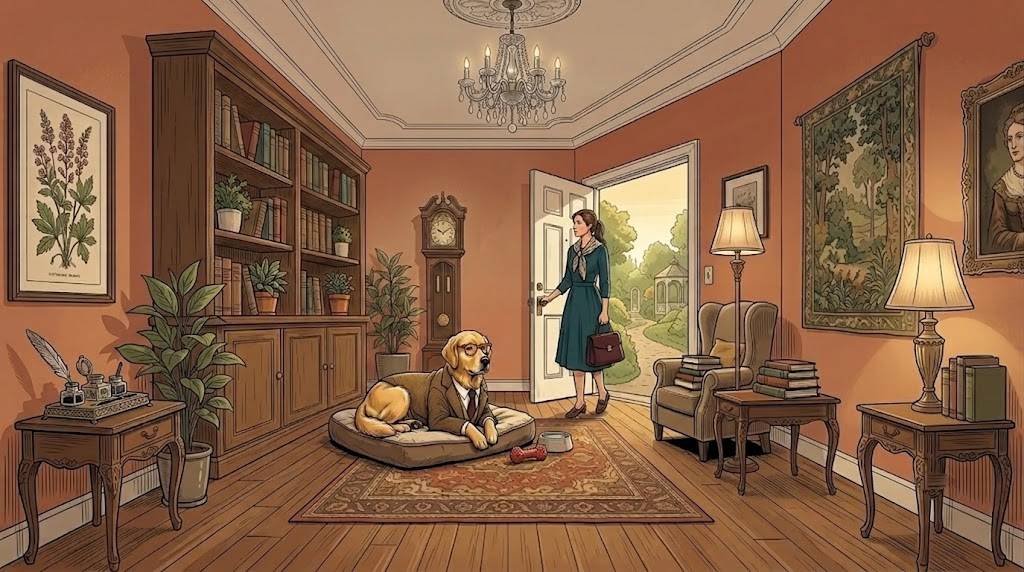
How Long Can You Leave a Dog Alone?
Hello, two-leggers.
Answer First
Most adult dogs should not routinely be left alone for more than about four hours, but age, health, temperament, training, and what happens during those hours matter as much as the clock. Puppies need much shorter absences. Some settled adult dogs can handle longer with the right setup, while anxious dogs may struggle within minutes. The real question is not only how long you are gone. It is what your dog experiences while you are gone.
The Number Everyone Wants — And Why It’s Only Half the Answer
Four hours is a useful welfare guideline — not a verdict, not a law, and not a number that applies equally to every dog in every household. Organizations that work on dog welfare use it as a recommended routine ceiling, and they are quick to note that individual variation matters considerably. It is a starting point for thinking, not a final answer.
Here is the part that usually gets left out of the conversation.
Think about the last time you sat in a waiting room for two hours with nothing to do — no phone, no book, no one you knew. Now think about the last two hours you spent somewhere you genuinely wanted to be, with people you liked, doing something that held your attention. The clock was identical. The experience was not.
A dog left alone with a mentally engaging routine — a walk before you leave, something to occupy them, a predictable return — experiences those four hours differently than a dog left without preparation in a space that gives them nothing to do but wait and wonder. The clock is the same. The dog is not having the same experience.
Quick Diagnosis — which situation are you in?
- Puppy, a few weeks or months old → start with the age section below.
- Adult dog, previously fine, but your office schedule changed → gradual reconditioning matters.
- Adult dog already showing distress signs → go to the separation anxiety guidance.
- Adopted dog with unknown history → use a slower, more cautious schedule.
- Velcro type, working breed, or highly social individual → four hours may need more support, more preparation, or more caution.
- No distress signs, just guilt → keep reading; you may be closer to okay than you think.
Puppies, Adults, Seniors — It’s Not the Same Clock
A very young puppy cannot be left alone for four hours. This is not a philosophical position — it is a developmental fact. A puppy at eight weeks cannot hold its bladder for four hours, and it is only beginning to learn that the humans who feed it come back, and that being alone is not an emergency. That learning takes time.
Think of it this way: you would not leave a toddler alone for an afternoon, ask a teenager to check in every hour, and then express surprise when an elderly parent needs more help again. Same household, same care — the needs shift at each stage, not because something went wrong, but because different life stages have different requirements.
With puppies, the general approach is to work in increments tied roughly to age — younger puppies need someone checking in frequently, and the time alone extends gradually as they mature. By settled adulthood, four hours is generally workable as a routine. Some dogs manage more with the right preparation. Some need less.
Older dogs can go either way. Some seniors settle more deeply into routine and handle time alone with great composure. Others, particularly those experiencing cognitive or health changes, begin to need more frequent contact again — not because they have regressed, but because their circumstances have changed.
The guideline shifts across a dog’s life. What worked at three may need revisiting at ten.
Breed and Temperament Are Louder Than the Clock
Some dogs are built to check in with their humans more often than others. This is not a training failure — it is a function of what they were bred to do and who they happen to be as individuals.
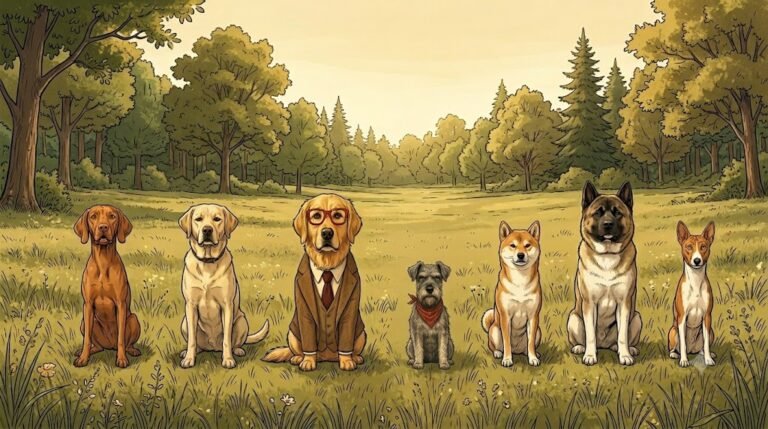
A breed developed for close partnership with a human does not simply file that orientation away when the front door closes. It remains present in the dog’s nervous system. That dog may find four hours genuinely harder than a breed that historically worked more independently — scent hounds following a trail, terriers in the field, livestock guardian breeds operating with significant autonomy. These tendencies are not guarantees. The individual dog in front of you may not match the breed average in either direction. But what a dog was originally bred to do is usually a more revealing question than how big it is.
This is exactly like discovering that a colleague who thrives with a fully autonomous remote schedule and a colleague who does their best work in a busy shared office have the same job title and the same theoretical hours. The job description does not determine what each person needs to function well.
Look at what your dog was bred to do and how they actually behave on days you have been home. Those two things together tell you more than the breed average alone.
What Actually Happens When You Leave
Dogs respond to time alone in roughly three ways.
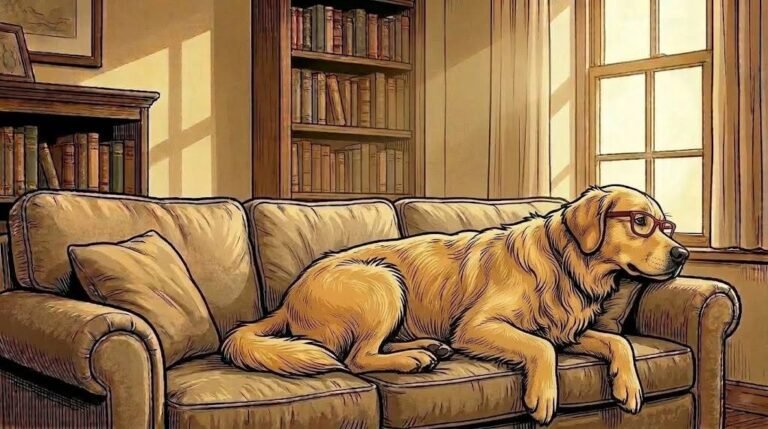
Some dogs settle — they find a comfortable spot, sleep, and wait with the calm of a dog who has learned that departures reliably end in returns. Some dogs occupy themselves in ways you would not have chosen for them: the kitchen towels, the wastepaper basket, something in a low cupboard. This dog is not distressed. This dog is bored. Different problem, different solution.
Some dogs do not settle at all. The door closes and, at some point, the waiting becomes something else — something that has a shape and a pattern and does not simply resolve when the timer runs out. I know something about this. My own relationship with The Therapist’s departures was, during a particular period of my life, a subject I would prefer to discuss with some editorial distance — and I have written about it more fully in the Dog Separation Anxiety Symptoms and How to Help a Dog with Separation Anxiety articles, which is where the actual work on that pattern lives.
The relevant point here is that separation anxiety looks different from boredom, has different causes, and requires a different response. If your dog is not settling, the clock is not the problem. The experience is the problem.
Understand which pattern your dog follows. Boredom and anxiety look similar from the outside but need entirely different responses.
How to Extend Alone Time Without Making It Worse
If your dog is settling reasonably or getting into low-level mischief — and your schedule has changed in a way that lengthens the time alone — there are practical things that help.
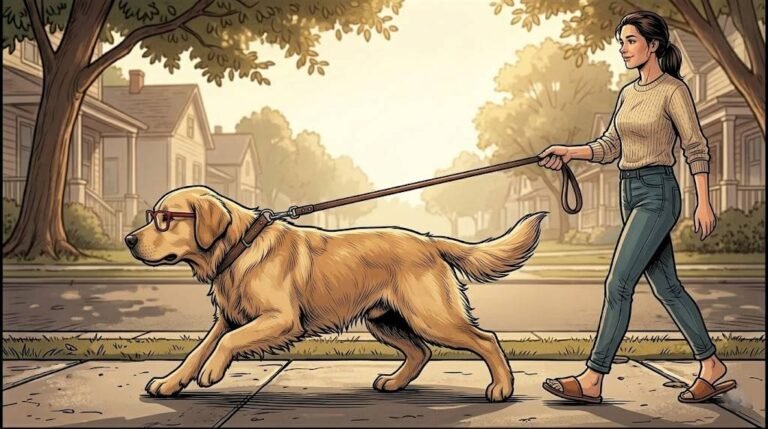
Exercise before you leave matters more than most people expect. A dog who has had a real walk — not a five-minute sidewalk loop, but actual movement with actual sniffing — is physiologically different from a dog who has not. The nervous system has had the opportunity to discharge some of what it was holding.
Mental occupation during alone time extends the quality of those hours. A frozen food toy, a chew, something that gives the dog a job that lasts — these do not solve the problem of too many hours, but they change the experience of the time that exists.
Build the schedule gradually if you are changing it. A dog who has been with you all day every day and is now being left for six hours does not have the evidence that six hours ends. A gradual extension gives the dog the data it needs: you come back. When the schedule makes this impossible, a dog walker or daycare is less a luxury than a genuine welfare consideration.
Pre-departure exercise, mental occupation, and a gradual schedule change are the three things most likely to make more time alone workable — in that order.
Alfred’s Rule
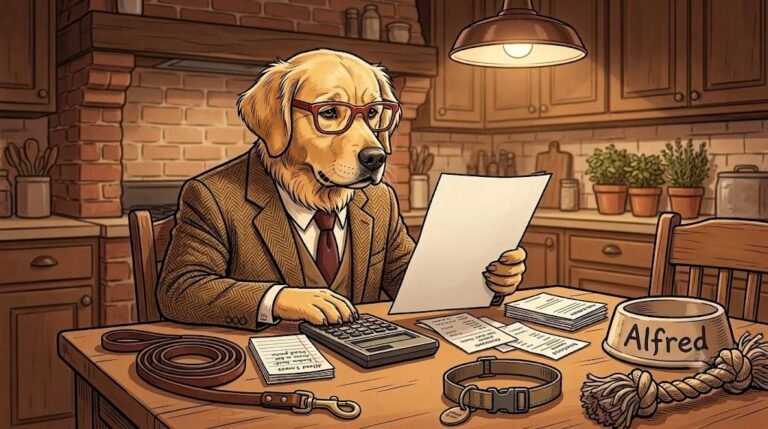
The question is not whether you can make four hours work on paper.
The question is what your dog is experiencing on the other side of the door.
A dog who is settling, waiting calmly, and genuinely fine is telling you something. A dog who is not is also telling you something. The clock is a guideline. Your dog’s actual behavior is the information.
If you are reading this before getting a dog, the alone time question belongs in your real-Tuesday calculation — alongside exercise and space and budget. I wrote about this more fully in How to Choose the Right Dog, which is where the full framework lives.
If you already have a dog, you are probably closer to okay than the guilt suggests. Pay attention to the dog in front of you. Adjust for what you see, not for what you fear.
Choose the setup for the dog you have — not the schedule you wished you had.
Professor Alfred
Advisor on the Question Behind the Question
FAQ
Can I leave my dog alone for 8 hours?
Some settled adult dogs manage eight hours occasionally, particularly with good pre-departure exercise, enrichment, and a midday break. As a routine — five days a week, indefinitely — eight hours is beyond the comfort zone for many dogs, especially without a midday break. If your schedule regularly requires this, a midday visit is less a convenience than a welfare consideration.
What age can puppies be left alone?
Very young puppies need someone present or checking in frequently. A rough working guide: puppies can manage roughly one hour per month of age, with a practical ceiling well below four hours until they are significantly older and have built confidence through reliable short absences. The individual puppy matters more than the formula.
How long can senior dogs be left alone?
It varies. Many senior dogs handle routine alone time well. Dogs with cognitive changes, health issues, or increased anxiety may need more frequent contact. Watch the individual dog, not the age number.
My dog seems fine — should I still worry?
If your dog is settling, not showing distress signs, eating normally, and behaving consistently — that is meaningful information. A dog who is genuinely fine is telling you something. Trust that, and keep watching.