What Dog Breed Is Right for Me? How to Actually Decide
Hello, two-leggers.
Answer first
There is no best breed. There is only the breed whose behavior history matches the life you actually live. Four variables decide this before anything else: how much energy the dog was bred to burn, how independently or how closely they were bred to work with humans, what they were originally built to do, and who and what else lives in your household. Run your life through those four filters first. The breed will follow.
Quick diagnosis: which situation are you actually in?
- If you keep saving photos of one breed → find out what that breed was built to do before you go any further.
- If you want a calm dog → define calm in daily hours, not in vibes.
- If you want a smart dog → ask whether you want a problem-solver living in your house, because that is what you will get.
- If you live with kids, cats, or long workdays → filter every breed through the household first, not last.
- If you want “easy to train” → check motivation, sensitivity, and independence; they are not the same thing, and all three vary enormously by breed.
You are not choosing a breed. You are choosing a behavior history.
Every breed exists because humans spent generations selecting for specific behaviors — not coat colors, not ear shapes, not the particular way a dog looks sitting in autumn light on a social media post. The behaviors came first. The appearance was mostly a side effect.
A Border Collie stares at moving things and tries to control them because that is what it was built to do. A Beagle follows its nose past everything else because that is what it was built to do. A Cavalier King Charles Spaniel presses against your leg and looks at you with uncomplicated devotion because that is what it was built to do. None of these dogs chose this. It was selected into them, generation by generation, until it became instinct rather than preference.
Ham would call this “false advertising with legs.” I would call it breed mismatch — the gap between what a person expected and what the breed’s actual history was always going to produce.
This is the same mistake as hiring someone without reading their previous job description — then being surprised when they do exactly what they were trained to do in every previous role. The behavior wasn’t hidden. It was simply not checked.
You are not choosing a breed. You are choosing the behavior history humans bred into that breed. The sooner that framing replaces “which breed do I like,” the better the decision will be.
Energy: breed groups are not decoration
The most common mismatch is energy — specifically, the gap between what a breed was built to burn and what a household can actually provide. Size does not predict this. Appearance does not predict this. Breed group does.

Working and herding breeds — Border Collies, Australian Shepherds, Belgian Malinois, Siberian Huskies — were built for sustained physical and mental output over hours, not a morning walk and an afternoon on the sofa. The mental component matters as much as the physical: a herding breed that has been walked but not given anything to think about has not had its needs met. It has simply been tired out in a way that will not last. When that output has nowhere to go, it goes somewhere anyway — into furniture, into fences, into behaviors that look like dysfunction but are actually the dog doing exactly what its history told it to do, in the only outlet available.
Sporting or Hunting breeds — Labradors, Golden Retrievers, Weimaraners, Vizslas — were built for active partnership with humans across long, varied days of activity. They are typically sociable and trainable, but the energy requirement is real, and the social requirement equally so. A hunting breed that is walked once and left alone for ten hours will find its own outlets: chewing, barking, destroying things, or simply being unable to settle — as I once demonstrated, comprehensively, across a sofa, a chair, and what I maintain was a structurally questionable wall. This is not bad behavior. It is unmet need, expressed in the only language available.
Companion breeds — Cavaliers, Shih Tzus, Maltese — were built for proximity and moderate activity. They are not without requirements: many have significant grooming needs, some carry breed-specific health vulnerabilities, and the desire for human contact can tip into separation anxiety when the household is routinely empty. But the daily energy requirement is categorically different from a working breed’s. A Greyhound, meanwhile, is one of the fastest land animals on earth and may be entirely content sleeping for long stretches on a comfortable surface — which surprises people who assumed speed and energy were the same thing. They are not.
Match the breed group’s energy history to what your actual week can reliably provide — not what your best week might manage.
What the breed was built to do follows you home
Breed purpose is not a historical footnote. It is a behavioral prediction that operates whether or not you have any use for the original job.
A herding breed will attempt to herd. If there are no sheep, it will herd children, cyclists, or other dogs — not out of disobedience, but because the behavior is working exactly as designed, in the absence of the original target. A terrier was built to locate and dispatch small animals independently, with persistence and without waiting for instructions. These qualities produce a dog that is confident, driven, and not especially interested in deferring to you when something more pressing is happening in the garden. A retriever was built to work closely with a human handler, pay attention to direction, and carry things gently — which produces a dog that is cooperative, attentive, and frequently found with something in its mouth.
None of this is the dog’s fault. It is the job description, still running, long after the original job disappeared.
If a breed’s original purpose requires behaviors that do not fit your life — sustained independence, high prey drive, vocal persistence, the need to work a problem until it is resolved — that breed will express those behaviors somewhere. The question is not whether the history will show up. It is whether you have somewhere for it to go. A breed’s original purpose is not a personality quirk. It is the operating system.
I’ve written about this at a broader level in How to Choose the Right Dog, and about the predictability difference between purebreds and mixed breeds in Purebred vs. Mixed Breed. What neither of those covers is the specific translation from breed trait to daily household consequence — which is what you are actually working out here.
Independence vs. velcro: not a personality flaw, a design feature
Some breeds were built to work at a distance from their handler — to make independent decisions, track a scent without checking back, assess a situation without waiting for input. Basset Hounds, Bloodhounds, Akitas, Shiba Inu fall into this category. These breeds tend to be described as stubborn, but stubbornness is the wrong frame. They were designed not to need constant direction. That design is still running.
Other breeds were built for close partnership — to watch their handler, take direction, stay attentive, check in frequently. Golden Retrievers, Border Collies, Vizslas, German Shepherds, Australian Shepherds, Labrador Retrievers, and French Bulldogs tend this way. These breeds can tip toward separation anxiety when the human contact they were built for is not consistently available, because the contact was not optional in the original job description either.
This is the same distinction as an introverted and an extroverted colleague — neither is better, but one will thrive working remotely while the other will not, and the difference is structural, not a personal failing. A dog bred for independence in a household that wants constant engagement, or a dog bred for velcro attachment in a household that’s away for long hours daily — both are mismatches. Neither dog is wrong. The pairing is.
Household filters: what lives in your house decides what breed can
Before any breed goes on the shortlist, it needs to pass through the household first.
Noise tolerance: some breeds are vocal by design — Beagles and Bloodhounds bay, Jack Russell Terriers and Airedales bark with genuine conviction, Siberian Huskies howl at a volume that surprises most first-time owners. If you live in an apartment with thin walls and close neighbors, this is not a minor inconvenience. It is a structural incompatibility that will not improve with training alone.
Handling tolerance: breeds vary significantly in how much physical contact and proximity they find comfortable. Akitas, Chow Chows, and Shiba Inus were bred for independence rather than close human partnership, and many individuals of these breeds have a low tolerance for uninvited physical contact — nail trims, hugs, being grabbed suddenly. A breed in this category in a household with young children who cannot yet read a dog’s signals is a predictable risk, not a surprise.
Prey drive: high prey drive and cats in the same household requires honest evaluation, not optimism. Greyhounds, Siberian Huskies, German Shorthaired Pointers, and most terrier breeds carry prey drive that does not switch off because the household would prefer it to. So does high prey drive and a garden with small animals, or a neighborhood with active wildlife.
Alone-time tolerance: how long will this dog be alone on a typical workday? This single variable filters the list faster than almost any other. Vizslas, Border Collies, and German Shepherds may struggle badly with routine long absences. Basset Hounds, Greyhounds, Basenjis, Bullmastiffs, and Lhasa Apsos tend to tolerate solitude considerably better — not because they need less care, but because their temperament does not depend on constant human presence. The consequences of a poor match here are specific, recurring, and not resolved by getting a second dog unless the second dog is also the right fit.
Grooming load: this is the variable people most consistently underestimate at the point of decision. Poodles, Bichon Frises, Afghan Hounds, Shih Tzus, and Old English Sheepdogs all require either daily brushing, professional grooming every four to six weeks, or both — indefinitely, for the entire life of the dog. That cost in time and money is real whether or not it was factored in at the start.
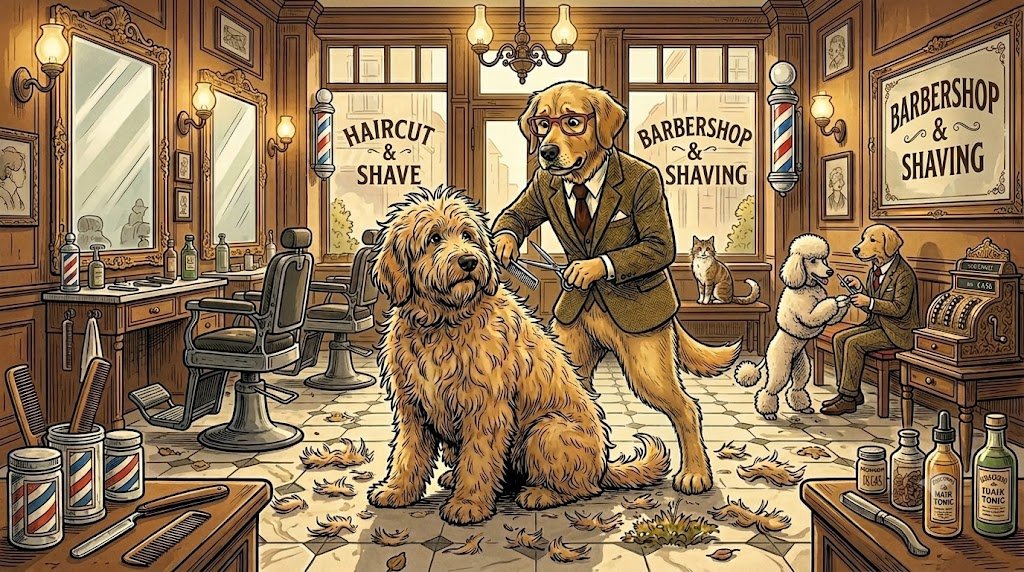
Run the breed through each household filter before the shortlist forms — not after.
How to use this before you decide
A framework is only useful if it produces a decision. Here is how to apply what’s above before you commit to anything:
Start by listing three to five breeds you are genuinely considering. For each one, run it through the four filters: energy requirement, original breed purpose, independence versus human-closeness, and household compatibility. If a breed fails two or more filters against your actual life — not your ideal life, your actual one — it comes off the list, regardless of how compelling it looked in a photograph.
What remains after that filter is a shortlist of breeds whose behavior histories are at least compatible with your household. From there, the next question is whether any of those breeds are realistic for your experience level — some breeds are forgiving of first-time owners, others are not, and that difference is worth researching before you commit.
The breed you choose at the end of this process will probably not be the one you started with. That is not a failure of the process. That is the process working.
You are not choosing a breed. You are choosing a behavior history that was assembled over generations, for purposes that had nothing to do with your living room. The behavior will arrive with the dog. Your job, before any of that happens, is to find out what the history contains — and whether your actual life has room for it.
Alfred’s Rule: before you choose the breed, read the job description it was hired for.
Professor Alfred
Self-Appointed Translator of Canine Operating Systems
FAQ
How do I know which dog breed is right for me?
Start with four variables: energy level, original breed purpose, independence versus human-closeness, and household composition. A breed that fits all four is a much better starting point than one you found visually compelling.
What is the easiest dog breed for a first-time owner?
There’s no universal answer, but breeds with moderate energy, high trainability, and a history of close human partnership tend to offer more forgiving entry points. [Internal link: Best Dogs for First-Time Owners] covers this in more detail.
Does breed really predict a dog’s personality?
It predicts behavioral tendencies reliably — energy range, independence level, prey drive, and the general shape of how the dog will interact with the world. Individual variation exists within every breed, but the tendencies are real.
What if I want a smart dog?
Define what you mean first. High intelligence in dogs often means high problem-solving drive — which means the dog will solve problems whether or not you’ve given it sanctioned ones. Some of the most intelligent breeds are also the most demanding to live with.
Can a high-energy breed work in an apartment?
Sometimes, if the exercise and mental stimulation needs are genuinely met daily. The apartment itself is less decisive than the owner’s actual schedule — but many high-energy breeds are not a realistic fit for most apartment-based routines.