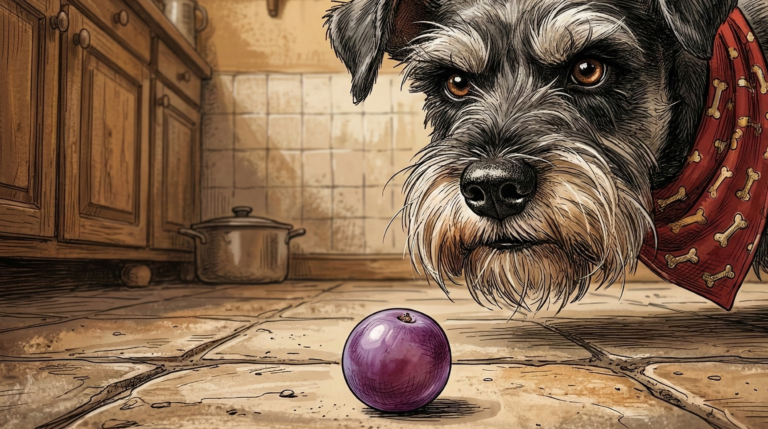
Chocolate Is Not Candy — It’s Poison
Yo, food lovers.
Answer First
Chocolate is toxic to dogs because it contains theobromine and caffeine — compounds dogs process much more slowly than humans. These can build up and affect the heart and nervous system. Dark chocolate, baking chocolate, and cocoa powder are the highest-risk types. Symptoms may appear within several hours and can include vomiting, restlessness, rapid heart rate, tremors, and seizures. If your dog ate chocolate, call your vet, an emergency vet, or animal poison control for case-specific advice. Don’t wait to see what happens.
Quick Check: Did Your Dog Eat Chocolate?
Call your vet immediately if:
Your dog ate dark chocolate, baking chocolate, or cocoa powder
Your dog ate any amount and is small, old, or unwell
Vomiting, restlessness, rapid breathing, rapid heart rate, or tremors appear
You don’t know how much was eaten
Milk chocolate usually requires more volume to cause serious harm — but still call for advice. White chocolate has very little theobromine, but its fat and sugar content can still cause problems.
When in doubt → call.
The Bakery
Second week on the street. I hadn’t figured out the system yet. Didn’t know which alleys refilled when. Didn’t know which restaurants threw out what. Didn’t know anything, really, except that I was hungry and the city smelled like food in every direction.
Found it in front of a bakery. A chocolate bar, still in the wrapper, barely melted from the afternoon heat. Sitting on top of the trash like it had been left there specifically for me.

Smelled incredible. Sweet and rich and like everything good I’d never had.
George was there. We’d been working the same block for a few days. Uneasy arrangement — he had information, I had access to high places. Neither of us had formally agreed to anything yet, but we kept ending up in the same alleys.
He saw me reach for it.
“No.”
Told him it smelled amazing. Told him I was hungry. Told him I was just going to taste it — taste first, ask questions later, that’s my rule.
“It’s poison for dogs. You eat it, you get sick. Maybe you die.”
I looked at him. Then at the chocolate. George says everything is dangerous. Expired fish: dangerous. Standing water: dangerous. Anything that smells good: definitely dangerous. I’d started filing his warnings under “George being George.”
“You eaten chocolate before?” I asked.
“No.”
“Then how do you know?”
“George has seen other dogs eat it. George has seen what happens after.”
I looked at the chocolate again. It smelled extraordinary.
“How bad?” I asked.
George was quiet for a moment. “Bad enough that they didn’t come back to this alley.”
I should have listened. I want to be clear about this, for the record: I should have listened to the rat.
I ate it anyway.
What Happened Next
Nothing, at first. That was the cruel part. For the first hour I felt fine. Better than fine — I’d eaten something that tasted incredible and nothing bad had happened. I started thinking George was wrong. Started feeling like maybe his street wisdom had limits.
Then my stomach moved.
Not hunger, something else. A slow, rolling wrongness that started somewhere deep and spread outward.
I vomited. Once, then again before I could move away from the first. George stood a few meters back, shaking his head.
Then my heart started racing. Not exercise-racing — something faster, more frantic, like it was trying to escape my chest. I could feel it in my throat. I lay down because standing felt wrong.
“George.” My voice came out smaller than I expected.
He moved closer. Sat near my head.
The shaking started maybe two hours in. Not cold-shaking. Every muscle in my body vibrating independently, like they’d all decided to disagree with each other. I couldn’t control it. Couldn’t stop it. Just had to wait while my body worked through whatever I’d done to it.
At some point I stopped counting time. There was just the shaking, and the nausea, and the heart going too fast, and George sitting nearby, occasionally bringing water from a puddle a few meters away. He’d nudge it toward me, then go back to his spot.
“Am I dying?” I asked at some point.
George considered this with more seriousness than I wanted him to.
“Probably not,” he said. “You ate a small amount. You’re a small dog. But it will be unpleasant, yes.”
Unpleasant. Six hours of vomiting and tremors and a heart rate that felt like it belonged to a much smaller, much more panicked animal. George’s definition of unpleasant was doing a lot of work.
Morning came eventually. The shaking slowed. The nausea settled into something dull and manageable. I could stand without the world tilting.
George was still there.
“You staying to say you told me so?” I asked.
“George told you.”
“Yes. I know. You told.”
“And?”
“And I should have listened.”
He seemed satisfied with that. “Now we talk about why.”
What George Explained
He wasn’t a scientist. Made that clear immediately.
“George doesn’t know chemistry. George knows patterns. If a dog eats chocolate, the dog gets sick — how sick depends on the type of chocolate and the size of the dog. George has seen it many times.”
But he knew enough. Laid it out in the flat, factual way he explained everything — like he was reading from a list he’d been keeping in his head for years.
“Theobromine — dogs can’t process it the way humans can. It builds up in the system and attacks the heart and nervous system.”
That explained the heart racing. The tremors.
“Dark chocolate is the worst — it has the most theobromine. Baking chocolate is also very bad. Milk chocolate needs more volume but it’s still dangerous. White chocolate has barely any theobromine, but the fat content causes its own problems.”
I asked how much was too much.
“Depends on size. You’re a small dog — one ounce of dark chocolate is a serious problem, maybe twenty grams. You ate half a bar of milk chocolate. Less concentrated. Enough to make you sick, but not enough to kill you. This time.”
This time. George had a gift for endings.
“The symptoms you had — vomiting, racing heart, shaking — that’s theobromine in the system. Some dogs also get seizures, depending on how much they ate and how sensitive they are. Worst cases end in heart failure. Death.”
I thought about the dogs George had mentioned. The ones who hadn’t come back to this alley.
“How fast does it kill?” I asked.
“Symptoms start in four hours, maybe twenty-four. By then the damage is already happening — the heart is working wrong, seizures are possible. If you wait to see what happens, sometimes it’s already too late.”
“If you feel sick now, you go to the vet. On the street, there’s no vet. You were lucky — small amount, small dog, you survived. A bigger dog, more chocolate, a different type — that’s a different story.”
I asked if there was a safe amount.
George thought about this. “Technically — very small amount, very large dog, milk chocolate — probably fine. But why risk? No upside. Chocolate isn’t worth dying over.”
I looked at the half-eaten wrapper still sitting on the pavement.
It had smelled so good.
“It still smells good,” I said.
“Yes,” George said. “This is the problem with poison. It often smells good.”
The Full Picture: Chocolate Toxicity by Type
George’s pattern-based knowledge matched what I learned later, after Big Guy took me in and I had access to people who could explain the chemistry properly.
Dark chocolate and baking chocolate are the most dangerous. Highest theobromine concentration per ounce. Baking chocolate — the kind with no sugar, used for actual baking — is the worst of all. One ounce can cause serious toxicity in a 20-pound dog.
Milk chocolate requires more volume to cause the same damage, but “more volume” is relative. A 20-pound dog getting seriously ill from a few ounces of milk chocolate is not a dramatic scenario. Dogs eat quickly. They don’t stop at one piece.
White chocolate contains almost no theobromine — it’s technically not real chocolate. But the fat and sugar content is significant, and large amounts can cause pancreatitis. Not “kills quickly” dangerous, but still not safe.
Cocoa powder is concentrated and highly toxic. Gets used in baking, hot chocolate, some protein powders. Keep it completely out of reach.
Symptoms timeline:
- 2-4 hours: Vomiting, diarrhea, restlessness, excessive thirst
- 4-12 hours: Increased heart rate, rapid breathing, muscle tremors
- 12-24 hours: Seizures, heart arrhythmia, in severe cases — death
The timing matters. By the time seizures start, you’re in emergency territory. The window for effective treatment is the early hours, before the theobromine has fully built up.
What George Got Right
He didn’t know what theobromine actually was. Didn’t know the mechanism exactly. But he knew the pattern — dog eats chocolate, dog gets sick, more chocolate means more sick, dark chocolate means worse.
That’s street education. You observe outcomes, you remember them, you adjust behavior accordingly.
The difference between George and most humans is that George actually adjusted. He had seen dogs eat chocolate and die or suffer, and he filed that information away as: chocolate kills dogs, don’t let dogs eat chocolate.
A lot of humans see their dog steal a piece of chocolate, see the dog seem fine, and file it as: chocolate is probably okay in small amounts.
Sometimes they’re right. Sometimes the dog just got lucky that time. Sometimes the next time, same dog, same chocolate, different outcome. Dogs vary in sensitivity. Types of chocolate vary in concentration. There is no reliable “probably fine” threshold.
George’s rule was simpler: don’t.
“No upside,” he said. “George doesn’t get anything from chocolate either — no nutrition, no benefit. Just risk. Why accept risk with no upside?”
I didn’t have a good answer.
I still don’t.
If Your Dog Ate Chocolate
Don’t wait to see what happens. Call your vet or an emergency animal hospital immediately.
Tell them:
- What type of chocolate (dark, milk, baking, white)
- How much your dog ate (estimate if necessary)
- When they ate it
- Your dog’s weight
- Any symptoms you’re seeing
They may tell you to come in immediately. They may tell you to monitor at home. They may instruct you to induce vomiting — but only do this if your vet specifically tells you to and tells you how. Incorrect vomiting induction can cause aspiration pneumonia.
The earlier you call, the better the outcome. Theobromine builds up over hours. Treatment in the first few hours is significantly more effective than treatment after symptoms have progressed.
Poison Control:
- ASPCA Animal Poison Control: (888) 426-4435
- Pet Poison Helpline: (855) 764-7661
Both have toxicologists available. Both charge a fee. Both are worth it.
Prevention
Keep chocolate out of reach. All of it. Every type. In fact, chocolate is just one of many toxic foods for dogs that can be sitting on your kitchen counter right now. Grapes and raisins are just as dangerous — and just as easy to miss.
This sounds simple. It’s apparently not.
Chocolate gets left on coffee tables. Gets dropped while baking. Gets left in bags on the floor. Gets given by guests who think “just a little won’t hurt.” Gets found by dogs who are very good at finding things.
At Christmas and Halloween especially — chocolate is everywhere and the usual systems break down. Extra vigilance during holidays. Chocolate gifts on low shelves, advent calendars within dog reach, Halloween candy on the coffee table — these are how it usually happens.
Your dog doesn’t know chocolate is dangerous. It smells extraordinary. It’s at floor level. It’s just sitting there.
I know this better than most.
The Morning After
I spent most of that morning lying on pavement, watching the city wake up around me. George sat nearby. We didn’t talk much.
Eventually I asked him why he’d stayed.
“Investment,” he said. “George teaches, you survive, deal continues.”
“That’s the only reason?”
He groomed his whiskers. Took his time.
“Food tastes better with company,” he said finally. “Even when company is sick and smells bad.”

Coming from George, whose breath could strip paint off a wall, this felt like high praise.
I never touched chocolate again. Not once. Not even when it smelled incredible — and it always smells incredible. That’s the thing about poison. It doesn’t smell like poison. It smells like the best thing you’ve ever encountered, sitting right there on the pavement, just for you.
George was right about that too.
He was right about most things.
I just had to learn it the hard way.
Ham
Chocolate Survivor, Reformed Impulse Eater, Still Grateful George Stayed
Our content is for educational purposes only, not veterinary advice. If your dog ate chocolate, contact your vet immediately.
FAQ
How much chocolate is dangerous for dogs? Depends on type and dog size. One ounce of dark chocolate can seriously harm a 20-pound dog. Baking chocolate is the most concentrated. Milk chocolate requires more volume but is still dangerous. White chocolate has minimal theobromine but high fat content.
My dog ate chocolate and seems fine — should I still call? Yes. Symptoms can take four to twenty-four hours to appear. Seeming fine now doesn’t mean fine later. Theobromine builds up. Call your vet with details on what type and how much.
What are the symptoms of chocolate poisoning in dogs? Vomiting, diarrhea, restlessness, rapid heart rate, tremors, and in severe cases — seizures. Symptoms typically begin two to four hours after ingestion and can progress over twenty-four hours.
Is white chocolate dangerous for dogs? Less so for theobromine, but the high fat and sugar content can cause pancreatitis. Not safe to give dogs, even if the toxicity mechanism differs from dark chocolate.
What should I do if my dog ate chocolate? Call your vet immediately. Tell them the type of chocolate, how much, when, and your dog’s weight. Don’t wait for symptoms. Treatment is significantly more effective in the first few hours.