Onions, Garlic, and the Allium Family: Slow Toxins for Dogs
Yo, food lovers.
Answer First
Onions, garlic, leeks, and chives can be toxic to dogs in many forms — raw, cooked, powdered, dried, or mixed into food. They can damage red blood cells and may lead to hemolytic anemia. Symptoms may appear later, sometimes after a day or more, which makes allium exposure especially dangerous. Garlic can be especially concentrated, particularly in powdered or dried form. If your dog ate any allium family food, call your veterinarian, an emergency vet, or animal poison control. Don’t wait for symptoms that may take time to appear.
Quick Check: Did Your Dog Eat Onions or Garlic?
Call your vet immediately if:
Your dog ate onions, garlic, leeks, chives, or any dish containing them
Lethargy, weakness, pale gums, vomiting, loss of appetite, or rapid breathing appear in the days after
Your dog’s urine appears orange, red, brown, or unusually dark
You’re not sure how much was eaten
The danger with allium toxicity is the delay. Your dog may seem normal while red blood cell damage is developing. By the time symptoms appear, the problem may already be more serious, and early veterinary guidance matters.
When in doubt → call.
Francie
I smelled her before I saw her.
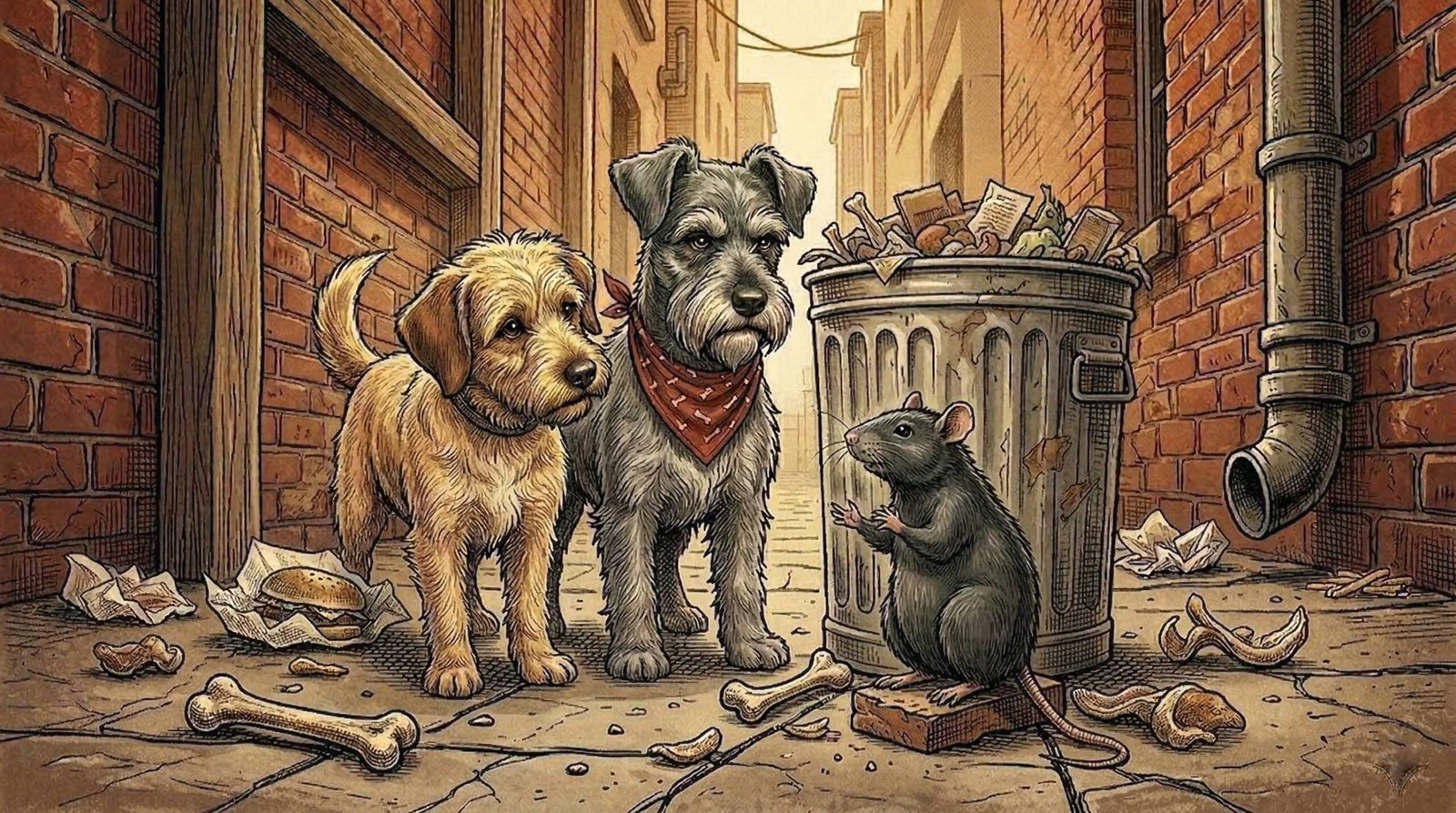
Not Francie specifically — the alley behind the Italian restaurant, the discarded vegetable scraps, the particular combination of food waste and evening air that meant someone had thrown out kitchen prep. Good alley. I knew it well.
Then I saw her. Nose down, tail up, working a line across the pavement with the focused intensity of a professional. Completely absorbed. Completely oblivious.
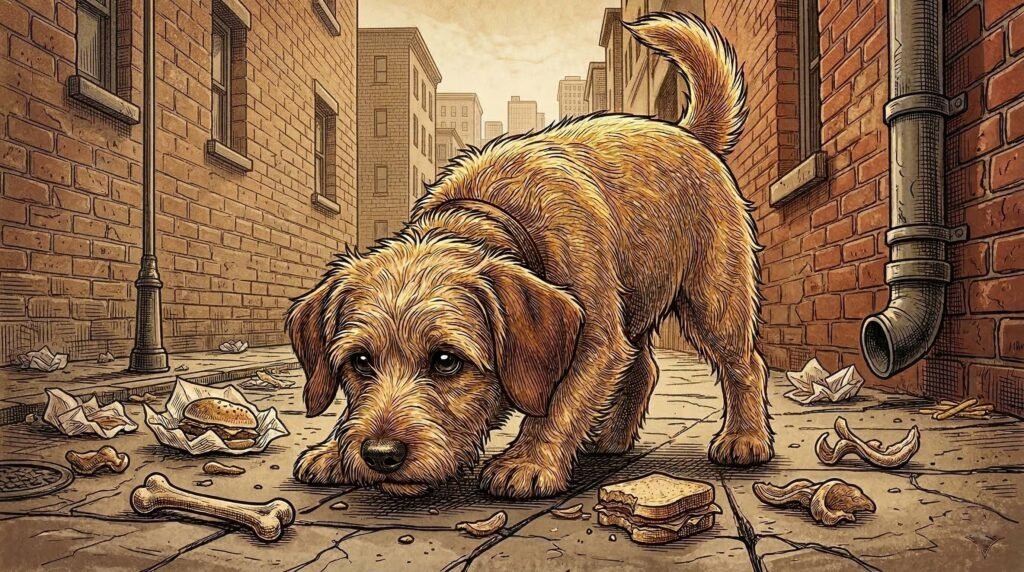
Francie.
Of all the alleys in this city.
She’s a golden-beagle mix — which means she got the golden’s enthusiasm for everything and the beagle’s nose for finding it. Dangerous combination on a good day. On a day when someone had thrown out half a bag of garlic cloves and a pile of onion skins, it was a disaster waiting to happen.
I’d known Francie a while. We talked sometimes when our humans crossed paths on walks — mostly about food, because that’s what we have in common, and because Francie has opinions about food that I respect even if her standards are higher than mine. She eats four times a day at home. Four. The concept is almost offensive.
She escapes sometimes. Not out of desperation — Francie has never been desperate a day in her life. She escapes because the world smells interesting and her nose won’t leave her alone about it. Her owner doesn’t know she’s here. Her owner probably thinks she’s asleep in the backyard.
She was six inches from a pile of garlic cloves.
“Francie.”
She looked up. Tail immediately started going. “Ham. You’re here.”
“Don’t eat that.”
She looked back down at the garlic. Considered it. “It smells interesting.”
“I know.”
“Is it good?”
“No.”
She straightened up slightly. Francie is not reckless — she’s just optimistic. There’s a difference. “How do you know?”
And there it was. The question that opened everything up.
The First Time
I was a few weeks old when I ate garlic for the first time.
Didn’t know what it was. Something fell from the counter, I ate it, because that’s what you do when you’re a few weeks old and small and hungry and the world is full of things to put in your mouth. Standard procedure.
What happened after was not standard.
The vomiting came first. Then the weakness. Then the vet — bright lights, strange smells, people handling me in ways I didn’t understand. My owners panicking. Numbers being discussed that meant nothing to me but clearly meant something to them.
I recovered. That time.
It wasn’t the last vet visit. Not even close. But it was the first one I remember clearly, which probably says something about how bad it was.
Here’s the ironic part — the part I’ve had years to appreciate fully: garlic didn’t make me an outdoor dog. My personality did that. The vet bills were just the last straw. But garlic was visit number one, which means technically, garlic started the whole chain of events that ended with me on the street.
I try not to hold grudges against vegetables.
I mostly succeed.
“How do I know,” I said to Francie. “Because I’ve been to that vet. Because of garlic specifically.”
Francie’s tail slowed slightly. “That’s why you ended up—”
“Partly,” I said. “Among other reasons.”
She looked at the garlic cloves again. Then back at me. “Okay,” she said. “Tell me.”
What George Taught Me, What I’m Telling You
George appeared from somewhere — he does that, materializes when things are happening, like he has sensors for educational opportunities.
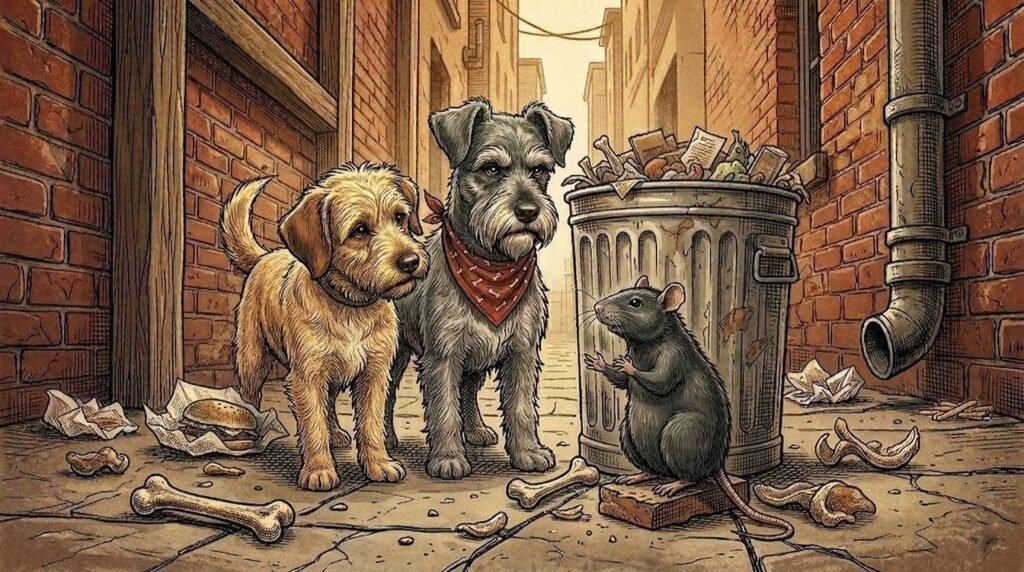
I’d seen that look before. It meant: proceed, I’m observing.
I turned back to Francie.
“The onion family,” I said. “Onions, garlic, leeks, chives. All of them. Every form — raw, cooked, powdered, dried. All toxic.“
Francie’s nose was still technically pointed toward the garlic. Beagle instincts don’t fully switch off. “Why?”
“They destroy red blood cells. Your blood stops being able to carry oxygen properly. It’s called hemolytic anemia.”
“That sounds bad.”
“It is. And here’s the worst part — it’s slow. You eat something, you feel fine. Next day, still fine. Day after that, maybe a little tired. Day three or four, you can barely move. By then the damage has been building the whole time.”
Francie finally moved her nose away from the garlic. Properly away, not just redirected. “So you wouldn’t know.”
“That’s exactly it. You wouldn’t know. Your owner wouldn’t know. They’d think you were tired, or coming down with something. By the time anyone figures it out, your red blood cells are already destroyed.”
She sat down. Thinking. Francie thinks more than people give her credit for — she just usually does it while also following a scent trail.
“Is garlic the worst?”
“Garlic is worst. Significantly more potent than onions by weight. Onions need more volume but they’ll still get there. Leeks, chives — same family, same problem, different amounts.”
“And cooked doesn’t help?”
“Makes no difference. The compounds survive cooking, drying, powdering. That’s why it’s in everything — garlic powder, onion powder, seasoning mixes. Your owners put it in food to make it taste better. Then they give you a taste. They’re not trying to hurt you. They just don’t know.”
Francie looked at the pile of onion skins a meter away. “Those too?”
“Those too.”
She stood up. Moved away from both piles with a deliberateness that I found genuinely touching.
“Okay,” she said. “I wasn’t really going to eat it anyway.”
“You were six inches away.”
“I was investigating.”
“Your nose was touching a garlic clove.”
“Investigating thoroughly,” she said, with dignity.
From the ledge, George made a sound that might have been a laugh. Hard to tell with George.
What It Does, Specifically
I told Francie the practical version. Here’s the complete picture.
Allium vegetables contain organosulfur compounds. In dogs, these compounds oxidize hemoglobin — the protein in red blood cells that carries oxygen. Oxidized hemoglobin forms structures called Heinz bodies, which cause red blood cells to rupture.
The result is hemolytic anemia. Your dog’s blood loses its ability to transport oxygen. Organs start being starved of what they need. The body tries to compensate — heart works harder, breathing gets faster — but it’s fighting a losing battle if the exposure was significant.
Why the delay matters:
The compounds accumulate. One small exposure might cause mild damage that the body handles. Repeated small exposures — a little garlic in the food here, some onion in the leftovers there — stack up over time. Chronic low-level exposure can cause the same anemia as a single large dose, just more slowly and with even less warning.
What to watch for:
- Lethargy, weakness, reluctance to move
- Pale or yellowish gums
- Rapid breathing or heart rate
- Decreased appetite
- Orange or dark red urine
- Vomiting or diarrhea in the days after exposure
These symptoms appearing two to four days after your dog ate something should immediately raise the question: what did they eat recently?
Toxic doses:
Garlic becomes concerning at around 15-30 grams per kilogram of body weight — which sounds like a lot until you realize that’s one or two cloves for a small dog, and that’s a single exposure. Clinical signs have been reported at lower amounts, particularly with repeated exposure. Onions are less potent by weight, but a medium onion can still cause problems for a 20-pound dog.
Powdered forms are more concentrated. A small amount of garlic powder has significantly more organosulfur compounds than the equivalent weight of fresh garlic. A little seasoning in food, given regularly, adds up.
The Conversation Continued
“What did it feel like?” Francie asked. “When you ate it.”
She meant the garlic incident. When I was a few weeks old.
I thought about this. “I don’t remember the eating. I remember what came after. The vomiting. Being at the vet. My owners’ faces.”
“Were they scared?”
“Yes.”
“So they cared.”
“They cared,” I said. “They just had limits.”
Francie was quiet for a moment. She understood, I think, that this was as much as I was going to say about that.
“I’m glad you’re okay,” she said.
“I’m fine. Have been for a while.”
“I know. But still.”
From his ledge, George observed this exchange with the expression he gets when he’s filing information away. He does that with everything — stores it, categorizes it, keeps it for later.
“Francie,” he said. First time he’d spoken.
She looked at him. She’d noticed him before but hadn’t addressed him — Francie has good instincts about when to let things be.
“Nice dog,” George said. “For a house dog.”
Francie considered this. “Thank you. I think.”
“It’s a compliment,” George said. “Mostly.”
I said nothing. George caught my eye for exactly one second and looked away.
What Hides in Human Food
The obvious dangers are easy to avoid once you know about them. Raw onion on the counter. Garlic cloves on the floor. Those are visible.
The invisible ones are harder.
Pizza and pasta sauces — almost always contain garlic and onion, often in significant quantities. The cooking doesn’t neutralize the toxins.
Soups and broths — many commercial broths contain onion powder or garlic powder. Including some that are marketed as “dog-safe” additions to food. Read the label.
Seasoned meats — that chicken you’re cooking with garlic butter. The steak with the onion marinade. The leftovers that seem fine to share.
Baby food — some meat-based baby foods contain onion powder. This gets given to sick dogs because it’s soft and palatable. Check the ingredients.
Seasoning mixes and spice blends — onion and garlic powder appear in nearly every savory spice blend. Anything that’s been seasoned with a mix probably has allium compounds in it.
The pattern: anything that makes human food taste savory, rich, or complex probably has garlic or onion in it somewhere. George’s rule still stands. Anything that makes human food smell good, probably kills dogs.
He came up with that before I did. Credit where it’s due.
Before She Left
Francie had to go back. She always does — that’s the difference between us. She has somewhere to go back to.
“Your owner’s going to notice you’re gone,” I said.
“Probably already has.” She didn’t seem particularly worried. Francie’s owner has a well-practiced routine for escaped dogs that suggests this is not a new situation.
“What will you say?”
“Nothing. I’m a dog.”
Fair point.
She started toward the alley exit, nose already drifting downward toward the pavement — not looking for anything specific, just existing in a world of smells the way beagles do. Then she stopped.
“Ham.”
“Yeah.”
“Thank you. For the garlic thing. And the other times.”
“You would have figured it out.”
“Maybe.” She looked back at the garlic cloves, still sitting where they’d been. “But probably after eating some first.”
She left. I watched her go until she turned the corner.
George climbed down from his ledge and stood next to me.
“She comes back,” he said. “She always does.”
“She lives nearby.”
“That is not what George means.”
I didn’t answer. George knows when not to push things. One of his better qualities.
We sat in the alley for a while after. The garlic cloves sat untouched on the pavement. The onion skins moved slightly in the evening breeze.
I’d eaten garlic once, before I understood what anything was. It had sent me to the vet twenty-three times in a month — different disasters, same bills — and eventually to the street. And now I was sitting in an alley explaining to a friend why garlic was dangerous, and George looked on like a teacher seeing a student finally get something right.
Not a bad ending for a vegetable that started the whole thing.
If Your Dog Ate Onions or Garlic
Call your vet even if your dog seems fine. The delay in symptoms is exactly what makes this dangerous — fine today doesn’t mean fine tomorrow.
Tell them:
- What they ate (onion, garlic, leeks, chives, or a product containing them)
- How much and in what form (raw, cooked, powdered)
- When they ate it
- Your dog’s weight
Treatment may include induced vomiting if very recent, activated charcoal, IV fluids, and in severe cases, blood transfusion. Early intervention significantly improves outcomes.
Poison Control:
- ASPCA Animal Poison Control: (888) 426-4435
- Pet Poison Helpline: (855) 764-7661
Prevention
Assume all savory human food contains allium compounds until you’ve verified otherwise. This is not paranoia — it’s accurate. Onions and garlic aren’t the only danger — grapes and raisins can kill just as quietly.
Keep raw onions and garlic stored where your dog can’t reach them. Secure trash containing food prep waste. Don’t share leftovers without checking ingredients. Educate anyone who feeds your dog — guests, children, family members — that garlic and onion are not safe “just a little.”
Check labels on broths, sauces, and seasoning mixes before adding them to your dog’s food.
Francie nearly ate garlic because it was there and her nose told her to investigate. Your dog will do the same. The difference between investigating and eating is sometimes less than six inches.
Ham
Garlic Survivor, Reluctant Allium Expert, Occasional Friend of Escaped House Dogs
Our content is for educational purposes only, not veterinary advice. If your dog ate onions, garlic, or any allium family food, contact your vet immediately.
FAQ
My dog ate onion yesterday and seems fine — should I still call the vet? Yes. Allium toxicity is delayed. Your dog can seem completely normal for two to four days while red blood cell damage accumulates. Call your vet even if there are no symptoms.
How much onion or garlic is toxic to dogs? Less than you’d expect. Garlic is significantly more potent than onions by weight — even small amounts can cause problems with repeated exposure. Cooked, raw, powdered, or dried forms are all dangerous.
Is garlic powder more dangerous than fresh garlic? Yes. Powdered forms are more concentrated. A small amount of garlic powder contains more organosulfur compounds than equivalent fresh garlic. Check seasoning mixes and spice blends.
What are the symptoms of onion poisoning in dogs? Lethargy, weakness, pale or yellowish gums, rapid breathing, decreased appetite, orange or dark red urine. Symptoms typically appear two to four days after ingestion. By then, damage is already done — early intervention matters.
Can dogs eat food cooked with onions or garlic? No. Cooking doesn’t neutralize the toxic compounds. Soups, sauces, seasoned meats, and any dish prepared with allium vegetables remains dangerous for dogs.