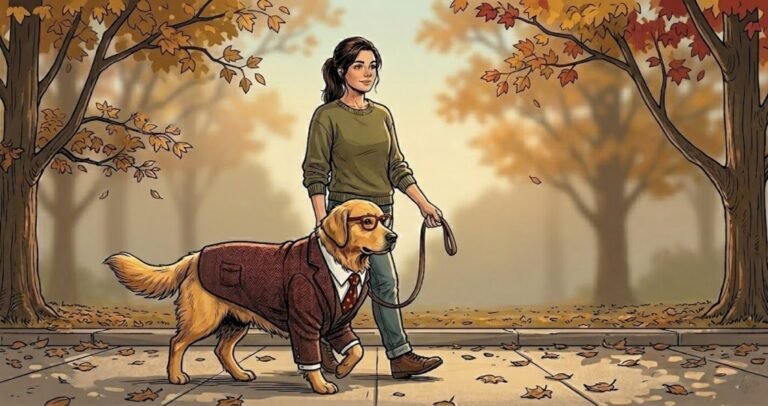
Should I Adopt a Rescue Dog?
Hello, two-leggers.
Answer First
Should I adopt a rescue dog? For many owners, yes — rescue is a genuinely good option, and the dogs available through shelters and rescue organizations are not uniformly damaged or difficult. But the decision deserves honesty, not sentiment. A rescue dog is not a moral shortcut, and choosing one because it feels like the right thing to do is not the same as choosing one because it is the right fit. The question worth asking is not whether rescue is good. It is whether rescue is right for your specific household, right now.
What rescue actually means
Rescue is not a single category. It includes municipal shelters, private rescue organizations, breed-specific rescues, and foster networks — each with different levels of information about the dogs in their care.
Some rescue dogs arrive with detailed behavioral assessments, known histories, and foster families who can describe exactly how the dog behaves around children, cats, other dogs, and loud noises. Some arrive with almost no history at all — found as strays, or surrendered with minimal documentation. The gap between these two situations is significant, and a good rescue organization will tell you which one you are dealing with.
This is not unlike hiring someone without seeing their CV. Sometimes it works perfectly. Sometimes there are surprises. A good agency tells you what they know — and flags what they do not. The quality of information available to you before adoption varies enormously depending on where you adopt from, and asking specific questions is not a sign of distrust. It is how you make a good decision.
The useful questions are boring, which is how you know they matter. Has this dog lived in a home? Has it met children? Has it been left alone? Has it shown fear around handling, food, doorways, strangers, or other dogs? These questions do not make you suspicious. They make you responsible.
Quick Diagnosis — is rescue a realistic fit for your situation?
- You can handle some uncertainty about history and temperament → rescue may fit well
- You need a highly predictable puppyhood and known genetics → think carefully before choosing rescue
- You have young children at home → choose only with thorough behavioral assessment and staff guidance
- You already have pets → ask specifically for dog-to-dog or cat history before committing
- You want to help but feel uncertain about the commitment → foster-to-adopt may be a safer starting point
What a rescue dog may bring with them
Some rescue dogs have histories that shaped them in ways that require patience and time to work with. An early decompression period — sometimes described by rescues as a shutdown phase — is common in the first days or weeks. The dog is not showing you who it is yet. It is managing the transition.
Think about moving to a new city as an adult. You bring everything you learned before — including the habits that formed in harder times, the instincts that kept you safe in a previous environment, the reflexes that made sense somewhere else. A rescue dog arriving in a new home is doing the same thing. The behavior you see in week one is not always the behavior you will see in month three.
This does not mean every rescue dog has significant behavioral needs. It means the adjustment period is real, and the dog you bring home will need time to decompress before its actual personality becomes fully visible.
If persistent distress continues well beyond the initial adjustment period, see Dog Separation Anxiety Symptoms or How to Help a Dog with Separation Anxiety — some dogs develop anxiety patterns that benefit from early professional input.
What rescue dogs do not automatically come with
The assumption that all rescue dogs carry serious trauma is worth examining carefully, because it is often wrong.
Many dogs in shelters and rescue organizations were surrendered for reasons that have nothing to do with the dog’s behavior: an owner’s housing situation changed, a family member developed an allergy, a life circumstance made keeping the dog impossible. The dog is not in rescue because something is wrong with it. It is in rescue because something changed in the owner’s life.
Assuming every rescue dog has a behavioral problem is like assuming everyone who lost a job has a performance issue. Most surrenders are owner circumstances, not dog problems. A good rescue organization will be honest with you about which category you are dealing with.
This matters because it changes what you should expect. A well-socialized adult dog surrendered for logistical reasons may settle into a new home with relatively little drama. The adjustment period is still real. The unknown history is still a factor. But the ceiling on what is possible is not lowered simply because the dog came from a rescue.
My friend Ham lived on the streets before Big Guy found him. You can read about what he went through.
Who rescue is genuinely right for
Rescue tends to fit well with households that are comfortable with some uncertainty, willing to invest time in the early adjustment period, and not dependent on a highly specific outcome from day one.
If you are the kind of person who buys a house that needs work rather than a new build — willing to invest time before the result fully appears — you are probably temperamentally suited to rescue. The process rewards patience and flexibility more than it rewards a precise plan.
Adult rescue dogs in particular can be a strong fit for owners who want to skip the puppy phase entirely: the sleepless nights, the housetraining, the adolescent chaos. Many adult rescue dogs arrive already housetrained, already past peak energy, already with a personality you can actually assess before you commit. Puppy vs. Adult Dog covers that specific trade-off in more detail.
How to Choose the Right Dog covers the broader decision framework if you are still working through what kind of dog fits your life.
I was not a rescue dog. The Therapist brought me home at eight weeks old, which sounds like a clean beginning, as if the story arrived with all its pages in order. It did not. She knew where I came from, and still somehow did not predict the diploma incident, the sofa assessment, or my early conviction that being left alone was a constitutional violation. This matters. A known origin does not mean a surprise-free dog. A rescue origin does not mean a problem dog. The difference is not certainty versus disaster. The difference is how much information you have before you begin.
Who should think carefully before choosing rescue
This is not a list of reasons not to rescue. It is a list of situations where additional care in the selection process matters.
First-time dog owners with no prior experience managing behavioral needs may find a rescue dog with an unknown history harder to navigate than they expected — not because rescue dogs are inherently difficult, but because the learning curve is steeper when the dog’s baseline is unclear.
Households with very young children benefit from thorough behavioral assessment before any adoption. This is like hiring a babysitter for a toddler: kindness matters, but it is not enough. You need to know how that person responds to noise, grabbing hands, sudden movement, frustration, and boundaries. A rescue dog in a home with young children needs the same kind of careful fit check.

Owners with existing pets should ask detailed, specific questions about the rescue dog’s history with other animals before committing. A rescue that cannot answer those questions is not necessarily hiding something — but it is a gap in information that matters for your household.
None of these situations make rescue impossible. They make the selection process more deliberate, and the questions you ask more specific.
A simple rule for deciding
Alfred’s rule: choose rescue if you are comfortable choosing a real dog in front of you, rather than an imagined dog in your head.
If the rescue can tell you how the dog behaves in a home, around people, around other animals, when left alone, and during handling, you are not choosing blindly. You are making a specific decision about a specific animal. That is very different from adopting a rescue dog as an idea.
If the answers are mostly unknown, that does not automatically mean no. It means your household needs enough flexibility to absorb uncertainty. Some homes can do that. Some cannot. Both are responsible answers.
The decision is not rescue or breeder. The decision is: which path gives this dog and this household the best chance of succeeding?
Professor Alfred
Self-Appointed Advisor on Decisions You Cannot Undo
FAQ
Are rescue dogs harder to train?
Not inherently. A rescue dog with an unknown history may take longer to read in the early weeks, and some may have learned behaviors that require patient unlearning. But many rescue dogs are well-socialized adults who train readily once trust is established. History matters less than the specific dog in front of you.
Do rescue dogs bond well with new owners?
Yes — dogs form new attachments throughout their lives. The bonding process with a rescue dog may take longer than with a puppy because the dog is assessing the new environment before fully committing. This is normal. It is not a sign that the dog will not bond. It is a sign that the dog is being careful, which is reasonable given its situation.
What is the decompression period?
The early weeks after adoption — sometimes described by rescues as a shutdown phase — are a period when the dog is adjusting to the new environment rather than showing its full personality. Keeping the first weeks calm, low-stimulus, and predictable supports a smoother transition. See First Week With a New Dog for what that period looks like in practice.
Can I adopt a rescue puppy?
Yes. Rescue puppies exist — litters surrendered or found as strays are common in many shelter systems. The selection process is the same: ask what is known, assess what the rescue can tell you, and go in with realistic expectations about what puppyhood involves regardless of where the puppy came from.
I was not rescued. I was selected, purchased, and eventually promoted to household professor, which means I approach this question with humility and only a small amount of academic tension. The Therapist made the right decision for her household. You will make the right decision for yours — provided you make it honestly.