Best Dogs for First-Time Owners: What Makes Breeds Forgiving
Hello, two-leggers.
Answer first
The best dog for a first-time owner is not the easiest-looking dog. It is the dog that gives a learning human enough room to become consistent. Five qualities define this: moderate energy, high trainability, resilience to normal beginner mistakes, predictable temperament, and patience with the human learning curve. No breed is error-proof. Some breeds are more forgiving of errors than others — and that difference is worth understanding before you decide.
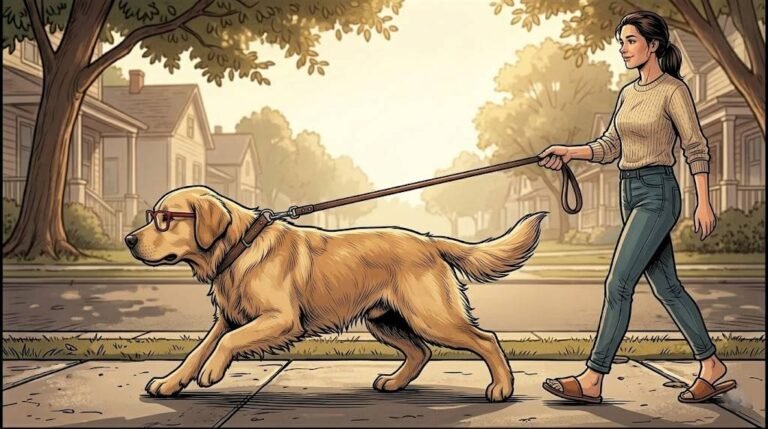
I arrived as a first dog, to a household with no prior dog experience, and The Therapist has since noted, with characteristic precision, that a more forgiving breed might have been a more strategic choice. I maintain that I was extremely forgiving. She maintains that the sofa, the leash, and approximately fourteen months of her morning routine would like to offer a second opinion.
Quick diagnosis: which situation are you actually in?
- If you want a dog that’s easy to train → check trainability and motivation, not just size.
- If you want a calm dog → define calm; some calm-looking breeds have significant health or exercise needs underneath.
- If you’re drawn to a breed because it’s small → small does not mean beginner-friendly; check temperament history.
- If you’ve never had a dog and want the safest entry point → consider an adult dog with a known temperament before committing to a puppy of any breed.
- If you already have a breed in mind → run it through the five qualities before you commit.
What “First-Time Friendly” Actually Means
A forgiving breed is not a breed without needs. It is a breed that does not punish ordinary human learning errors with immediate and lasting behavioral consequences.
A first-time owner will be inconsistent. This is not a character flaw — it is the nature of learning something new without prior experience. You will misread signals, reward the wrong behavior occasionally, apply training techniques incorrectly, and take longer than an experienced owner to notice when something is developing in the wrong direction. A forgiving breed absorbs this without collapsing behaviorally. A demanding breed does not.
This is the same difference as starting a new job under a manager who gives clear feedback, tolerates early mistakes as part of the learning process, and signals problems before they become irreversible — versus one where every early misstep compounds into a performance review you didn’t see coming. The work is the same. The margin for error is not.
The five qualities that make a breed forgiving in practice:
Moderate energy — high enough to be healthy and engaged, low enough that unmet exercise needs don’t immediately express themselves destructively.
High trainability — responds to positive reinforcement clearly and consistently, making early training legible to an inexperienced handler.
Resilience to inconsistency — doesn’t develop entrenched behavioral problems after ordinary beginner mistakes in timing or technique.
Predictable temperament — what you see in the first weeks is broadly what you will have. No significant hidden behavioral history waiting to surface.
Patience with the human learning curve — tolerates repeated attempts, unclear signals, and the inevitable gap between what the owner intends and what they actually communicate.
No breed has all five perfectly. The question is how many it has, and how strongly. I’ve written about how to assess this before choosing a breed in What Dog Breed Is Right for Me?, and about the broader decision framework in How to Choose the Right Dog.
Breeds That Often Give Beginners More Room to Learn
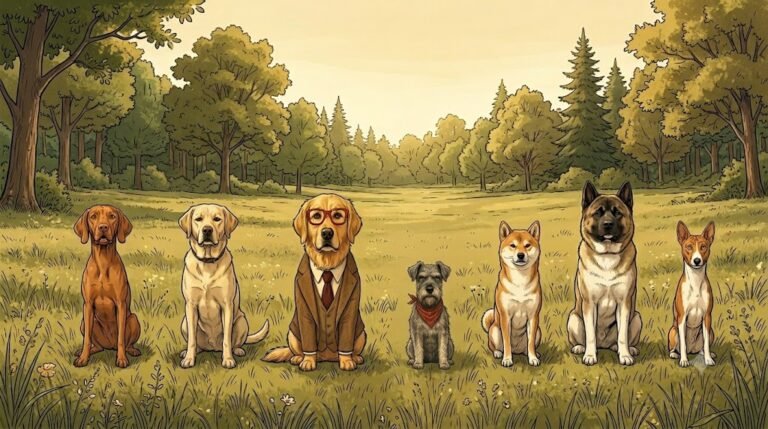
This is not a ranking. It is a list of breeds that tend to score well across the five qualities — with the honest caveats that belong alongside each one, because forgiving is not the same as effortless.
Labrador Retriever — high trainability, food motivation that makes early training straightforward, and a social temperament that absorbs beginner inconsistency better than most. Think of hiring a new colleague who actively wants to understand what you need, signals clearly when something isn’t working, and doesn’t hold early miscommunication against you. The caveat is real: as puppies and adolescents, Labradors are energetic, mouthy, and capable of significant pulling and jumping before training catches up. Forgiving does not mean effortless — it means the effort is legible, and the mistakes are recoverable.
Golden Retriever — similar profile to the Labrador, with a slightly softer temperament that responds well to gentle handling. The adolescent phase is equally real — energy, enthusiasm, and occasional furniture-related optimism that The Therapist has described, with admirable restraint, as “a period of adjustment.” I prefer the term “self-directed enrichment.” Forgiving, not automatic.
Bichon Frise — moderate energy, sociable, and more resilient to apartment living and irregular schedules than many small breeds. This is the equivalent of a flatmate who adapts to your schedule rather than insisting on their own — present, friendly, not high-maintenance about timing. Grooming needs are significant and non-optional, but the temperament is genuinely beginner-compatible.

Havanese — small, adaptable, social, and more tolerant of beginner inconsistency than most toy breeds. Trainable with positive reinforcement, and less terrier-brained than many dogs of similar size. A genuinely underrated entry point for first-time owners who want a smaller dog without the working-drive intensity that makes many comparable breeds harder than they look.
Standard Poodle — among the most trainable breeds available, which is both the advantage and the caveat. High intelligence means training goes well when done correctly — and also means an under-stimulated Poodle will find its own outlet. This is the equivalent of hiring an exceptionally capable person into a role without enough responsibility: the capability doesn’t disappear, it redirects. Grooming cost is real, recurring, and expensive. If both commitments — mental stimulation and professional grooming — are understood going in, the temperament is highly forgiving of beginner training errors.
Forgiving in Temperament, Demanding in Health Research
This is like buying a gentle used car that is lovely to drive, but only if you understand the maintenance history before you sign the papers. The temperament is the drive. The health profile is the maintenance history.
Pug — gentle, low-exercise, socially uncomplicated, and genuinely patient with beginners. The temperament is forgiving. The health profile requires active management: brachycephalic airway issues affect breathing, heat tolerance, and exercise capacity; weight monitoring is ongoing; eye vulnerability is breed-specific and real. A Pug from a health-tested line, with an owner who understands the medical responsibility going in, can be a good first dog. A Pug chosen because it seemed low-effort is a different situation.
Cavalier King Charles Spaniel — affectionate, gentle, adaptable, and socially easy. The temperament is one of the most beginner-compatible of any breed. The health caveat is significant: mitral valve disease is extremely common in Cavaliers and often becomes a major breed-specific concern with age; syringomyelia is a genuine welfare issue in the breed. Breeder selection and health testing matter more here than with most breeds on this list. Understood going in, the Cavalier can be a very good first dog. Chosen without that research, the veterinary reality arrives as a surprise with a significant cost attached.
Forgiving, But Not Beginner-Proof
Whippet — calm indoors, gentle in temperament, low grooming needs, and more adaptable to apartment living than their athletic build suggests. This is like owning a fast bicycle with excellent brakes — wonderful in the right space, risky if you assume the street will forgive you. The forgiving qualities are real. The non-optional caveat is equally real: recall can become unreliable around prey, even in otherwise well-trained Whippets, and prey drive is not a training problem to be solved — it is a breed characteristic to be managed, permanently, with a lead or a fully secured environment. A first-time owner who understands this going in will find the Whippet a genuinely rewarding entry point. One who assumes recall will come with time may find that a situation can become dangerous very quickly.
Breeds That Look Easy, Often Aren’t
Some breeds look easy because they are beautiful, small, popular, or familiar. That is not the same as beginner-friendly. This is like applying for a job because the title sounds simple, then discovering on Monday morning that it requires three certifications, night shifts, and emotional resilience you did not pack in your lunch bag.
Siberian Husky — beautiful, charismatic, and consistently chosen by first-time owners who underestimate the escape drive, the vocalization, the exercise requirement, and the independent decision-making that makes recall genuinely difficult. The Husky is not a hard dog for an experienced northern breed owner. It is a very hard dog for someone who has never had a dog before.
Dalmatian — high energy, high stamina, and historically bred for sustained activity alongside horses over long distances. The exercise requirement is not a daily walk — it is sustained, serious, daily activity. The breed also carries a higher-than-average rate of congenital deafness, which affects training in ways a first-time owner may not anticipate.

Chow Chow — independent, reserved, and not naturally oriented toward the responsive human partnership that makes early training legible. Early and extensive socialization is not optional. Not a breed that tolerates beginner inconsistency gracefully.
Jack Russell Terrier — small enough that people assume manageability. Bred to pursue prey into underground tunnels independently, without waiting for instruction. The drive, the energy, and the persistence do not scale down with the body size. Experienced terrier owners find them enormously rewarding. First-time owners frequently find them the most demanding dog they have ever encountered.
These breeds are not bad dogs. They are dogs that ask the human to arrive with more skill already installed.
What First-Time Owners Usually Get Wrong
The most common mistake is not choosing the wrong breed. It is choosing a breed before understanding what the learning curve of dog ownership actually looks like — and therefore not knowing which qualities in a dog would compensate for that curve.
This is the same trap as buying specialist equipment before learning the skill it’s for. The equipment is not wrong. The sequence is.
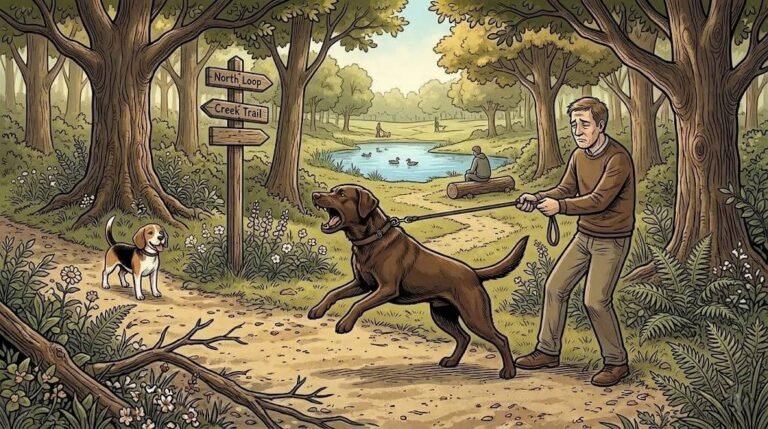
The Therapist had no prior dog experience when I arrived. What she figured out, through careful observation, considerable patience, and what I understand to have been a heavily annotated training book, was that my behavior had patterns — and that the patterns could be worked with. This took longer than either of us expected, and involved some structural damage that I maintain was investigative rather than destructive. A breed that signals more clearly and tolerates inconsistency more gracefully would have shortened that curve considerably.
An adult dog with a known temperament often does the same — not because adult dogs are easier in all respects, but because you are not guessing at who the dog will become while simultaneously learning how to be a dog owner. Puppy vs. Adult Dog covers this in more detail.
The second most common mistake is treating “forgiving” as a synonym for “no work required.” Every breed on the more forgiving list still needs training, consistency, socialization, and exercise. Forgiving means the margin for error is wider. It does not mean the margin is infinite.
The dog that gives a learning human enough room to become consistent is not always the dog that looked easiest in the photograph. It is the dog whose qualities meet you where you actually are — not where you expect to be once you have figured everything out.
Alfred’s Rule: choose the breed that forgives you for being a beginner, not the one that assumes you already aren’t.
Professor Alfred
First Dog, Retrospectively Forgiving
FAQ
What is the best dog for a first-time owner?
There’s no single answer, but breeds like Labrador Retrievers, Golden Retrievers, Bichon Frises, and Havanese tend to be more forgiving of beginner mistakes in training and consistency. The key qualities are moderate energy, high trainability, and resilience to ordinary human learning errors.
Are small dogs easier for first-time owners?
Not automatically. Many small breeds carry terrier or toy-breed histories that make them more demanding than their size suggests. Size predicts almost nothing about beginner-compatibility — temperament history and trainability matter more.
Is a Pug a good first dog?
The temperament is genuinely beginner-friendly. The health profile requires active management — brachycephalic airway issues, heat sensitivity, and weight monitoring are breed-specific realities, not occasional concerns. Research the health responsibilities before deciding.
Should a first-time owner get a puppy or an adult dog?
An adult dog with a known temperament often gives a first-time owner more room to learn, because you’re not guessing at who the dog will become while simultaneously learning how to be a dog owner.
Is a Husky a good dog for beginners?
Generally not. The exercise requirement, escape drive, vocalization, and recall difficulty make the Husky a genuinely challenging breed for someone without prior dog experience, despite its popularity.