
First Week With a New Dog
Hello, two-leggers.
Answer First
The first week with a new dog is not about training. It is about two creatures learning each other in an unfamiliar situation. Your dog is mapping a new space, reading new humans, and building the first evidence that this place is safe and predictable. Most of what feels like a problem in the first week is not a problem. It is adjustment. Keep the routine simple, the expectations low, and the space calm. The learning comes after the settling.
The First Day Is Not a Test
My friend, Ham arrived at The Big Guy’s home for the first time, I did what any reasonable snauzer would do: He sniffed everything within reach, identified three items of immediate interest, and fell asleep under the coffee table. The Big Guy did not attempt to teach him anything. He let him map the space.
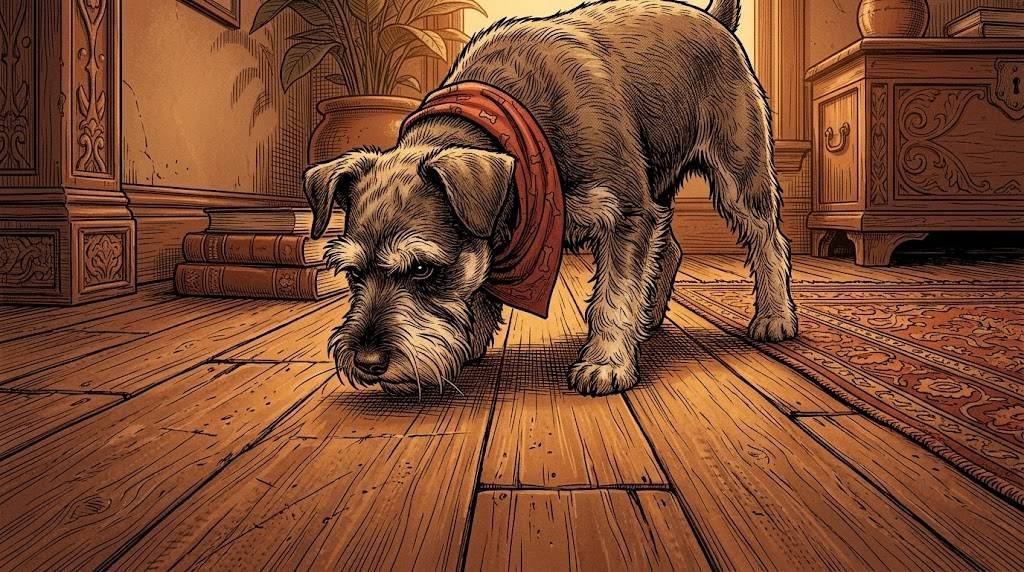
This is the correct approach.
The instinct on the first day is to introduce the dog to everyone, show them every room, let the children hold them, and generally celebrate the arrival in a way that feels appropriate to the occasion. The dog experiences this differently. A new environment is already significant sensory information. Adding a crowd and a series of unfamiliar handling experiences on top of it is a substantial load for an animal who has not yet established that this place is safe.
The better first day: let the dog arrive, sniff, explore at their own pace, find a resting spot, and begin to understand the shape of the space. Greet calmly. Move slowly. Keep the household quieter than usual.
Think of starting a new job: the first day is not about performance — it is about observation. You watch, you listen, you figure out where things are. The dog is doing the same thing.
Let the dog map the space before you ask anything of them. The first day is for arriving, not performing.
Quick Diagnosis — what kind of first week is this?
- Dog eats less but drinks, rests, and responds to you → likely normal adjustment. Keep the routine calm and monitor.
- Dog hides or retreats but comes out gradually → decompression. Reduce stimulation, give space.
- Dog cannot settle, paces, or vocalizes persistently → reduce stimulation further and monitor for anxiety signs.
- Dog has a single mild stomach upset → watch for recurrence and whether it worsens.
- Vomiting, repeated diarrhea, lethargy, or refusal to eat beyond 24 hours → call your vet.
Routine Is the Answer to Almost Everything
If there is one thing the first week needs more than anything else, it is a predictable daily structure that the dog can begin to read.
Dogs read patterns with remarkable precision. The walk that happens at the same time each morning becomes an anchor point. The feeding spot that never moves becomes a known element in an otherwise unmapped world. Each repeated pattern is a piece of evidence that this place works in a consistent way — and consistency is what allows a dog to relax.
This is exactly like recovering from jet lag: the fastest route back to feeling functional is not willpower but routine. You eat at the right times, you sleep at the right times, and gradually the body recalibrates. The new environment has disrupted every pattern the dog knew. A simple, repeated daily structure gives them something to recalibrate around.
What a workable first-week routine looks like:
Feeding: same spot, same times, same bowl. Whatever schedule you intend to keep long-term, start it now — the routine is part of what helps the dog settle.
Potty breaks: frequent and consistent, especially for puppies. After waking, after eating, after play. Accidents will happen. Clean them with enzymatic cleaner and move on.
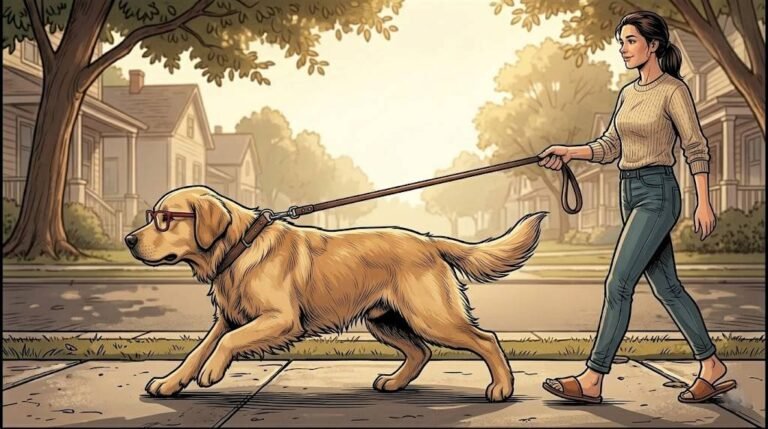
Walks: same time, manageable length. The first week is not for long exploratory walks in busy areas. A shorter, calmer walk gives the dog exercise and sniff time without overwhelming them.
Rest: more than you expect. A dog adjusting to a new environment tires faster than a settled dog. Build quiet time into the day.
Sleep location: decide where the dog sleeps and keep it consistent from night one.
Guest visits: limit them in the first week. An open-house policy in the first days adds stimulation at the worst possible time.
The routine does not need to be complicated. It needs to be consistent.
What to Expect — and What to Watch
Some things that happen in the first week are adjustment. Some are worth watching.
Normal adjustment looks like: eating less than usual for the first day or two, sleeping more than expected, moving cautiously through the space, gravitating toward a corner or under furniture. These are signs that the dog is processing a significant change, not that something is wrong.
Mild loose stool can happen during transition, but it should improve, not worsen. Repeated diarrhea, blood, vomiting, or lethargy is not adjustment.
A new environment disrupts sleep, appetite, and digestion in humans too — most people eat and sleep differently in an unfamiliar place for the first few nights. The dog is experiencing the same recalibration in a more acute form.
If your dog cannot settle at all — pacing, vocalizing, unable to rest even in a quiet space — watch the pattern beyond the first day or two. Persistent inability to settle can be an early sign of Separation Anxiety.
Adjustment is normal. Worsening or persistent symptoms are not. Know the difference.
The Mistakes That Cost the Most Time
Most first-week mistakes come from generosity — giving the dog too much, too soon, with the best intentions.
Too much space too soon. A dog with access to an entire house before they have mapped it cannot settle properly. Start with a defined area and expand gradually. How to Prepare Your Home for a New Dog covers this in detail, but the principle carries into the first week: less space, more clarity.
Inconsistent rules. Whatever the household rules are going to be, apply them from day one. A dog allowed on the sofa in the first week because it seemed kind, and then not allowed on the sofa in week three — I am personally familiar with this negotiation, and I can confirm it created confusion for everyone involved. The Therapist’s position ultimately prevailed.
Correction for accidents. A dog who toilets in the wrong place is still learning where the edges are. Correction after the fact teaches nothing useful and adds stress. Clean it up and move on.
Formal obedience training can wait. Routine, safety, and household boundaries start immediately.
This is like giving a new coworker access to every system on day one, then blaming them when they click the wrong thing. Structure comes before freedom.
Consistency from day one costs less time than correcting inconsistency later.
When to Call the Vet
If any of the following appear, call your veterinarian. Do not wait for the scheduled visit.
- Refusal to eat beyond 24 hours, especially with lethargy or other signs
- Repeated vomiting or diarrhea, or any vomiting or diarrhea with blood
- Labored or unusual breathing
- Pale gums
- Inability to stand or walk normally
- Any visible injury or swelling
You would not wait out repeated vomiting, pale skin, or sudden weakness in a person just because they had moved house. A new dog deserves the same caution.
If you are unsure, call the clinic and describe what you are seeing. The New Dog Vet Checklist has the full list of signs that warrant an earlier call.
If something seems wrong, call. Do not wait.
Alfred’s Rule
The first week is not a performance review — for either of you.
Your dog is not learning whether they can behave well enough to stay. They are learning whether this place is safe, whether you are predictable, and whether the patterns here can be trusted. That is the only question the first week needs to answer.
Keep it simple. Keep it consistent. The dog will show you the rest.
The first week is for arriving. Everything else comes after.
Professor Alfred
Settled, Eventually
FAQ
How long does it take a new dog to adjust?
The commonly referenced framework is the 3-3-3 rule: three days to decompress, three weeks to learn the routine, three months to feel at home. Individual dogs vary, and it can be a useful rough guide, not a guarantee.
What should I do the first week with a new dog?
Establish a consistent daily routine, limit stimulation, give the dog space to map the environment at their own pace, and keep rules consistent from day one. Formal obedience training can wait. Routine, safety, and household boundaries cannot wait.
Is it normal for a new dog not to eat?
Reduced appetite in the first day or two is common during adjustment. If your dog is not eating after 24 hours and is also showing lethargy, vomiting, or diarrhea, call your veterinarian.
Should I let my new dog sleep in my bed?
Wherever the dog sleeps long-term, start there from night one. Changing the arrangement after the first few nights costs more time than the initial decision.





One Comment
Comments are closed.