Mistakes Before Getting a Dog: What People Get Wrong
Hello, two-leggers.
Answer first
Most mistakes people make before getting a dog are not dog mistakes. They are human self-assessment mistakes. The dog has not arrived yet — so nothing about the dog is wrong at this stage. What goes wrong is the picture the future owner builds of themselves: how active they will be, how consistent, how prepared, how patient. That picture is almost always more flattering than the Tuesday in November that will eventually test it. The mistakes are fixable. Most of them are also predictable, which is the more useful fact.
I arrived into a household that loved me immediately and was, by its own later admission, approximately forty percent prepared for what I actually required. We worked it out. It took longer than it needed to.
Quick diagnosis: which mistake are you making right now?
- If you chose your breed primarily because of how it looks → you may be choosing for the wrong reasons.
- If your plan involves a more active, more organized future version of yourself → you may be overestimating that person.
- If you haven’t asked about health testing, breed temperament, or source → you may be skipping the research phase.
- If you’re planning to sort out the home setup after the dog arrives → you are preparing the home last.
- If you expect the dog to settle in within a few days → you may be underestimating the first weeks.
Choosing for the Wrong Reasons
The most common version of this mistake is choosing a breed for how it looks, how it appeared in a movie, or because someone you admire owns one and their life appeared to be going well. These are understandable starting points. None of them are the right starting point.
This is the same mistake as accepting a job because the company logo is appealing and the office looks nice in photographs — without asking what the role actually involves on an ordinary Wednesday. The logo is real. The office is real. Neither of them is the job.
A breed’s appearance is real. The temperament, energy requirement, and behavior history that come with it are also real, and they will be present on every Wednesday for the next decade regardless of how the breed looked in the photograph that started the process. I’ve written about how to read breed traits before deciding in What Dog Breed Is Right for Me?, and about the broader decision framework in How to Choose the Right Dog.
The question is not which dog you find most compelling. It is which dog fits the life you actually live.
Overestimating Your Future Self
This mistake is so common it deserves its own name. The future self who will walk the dog twice a day in all weather, maintain a consistent training schedule, and remain patient through the adolescent phase is a specific, optimistic fiction that most people construct without noticing.
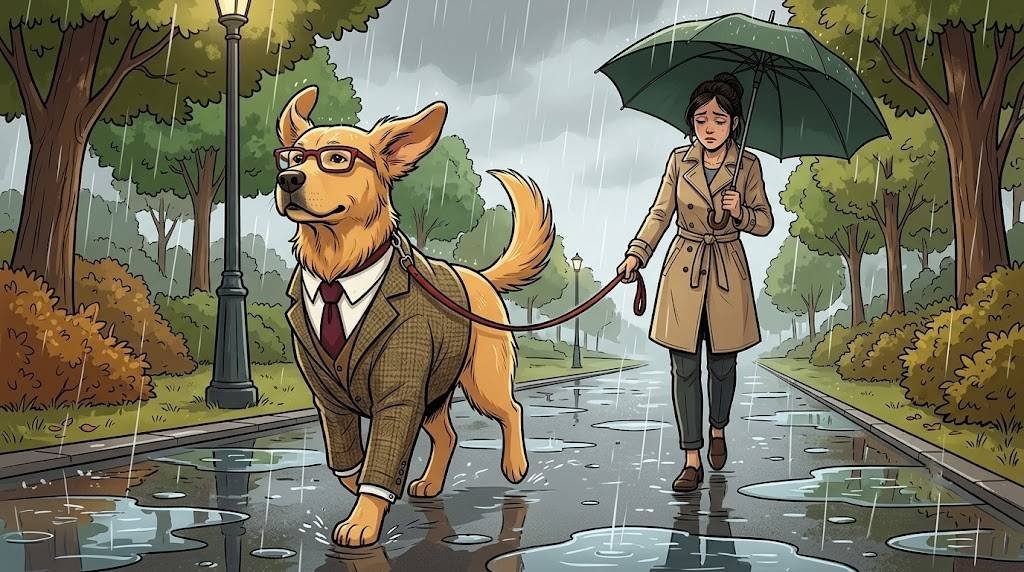
This is the gym membership problem — purchasing access to a version of your life that your future self is going to live, on the reasonable assumption that the purchase will help make it real. Sometimes it does. The dog, however, cannot be cancelled by direct debit.
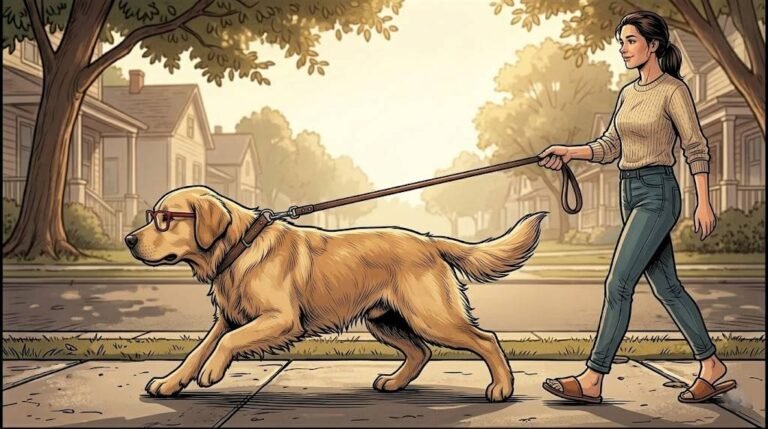
I was, in retrospect, an exceptionally demanding test of this principle. The Therapist’s future self had planned for a dog. The Therapist’s present self received a golden retriever adolescent with strong opinions about furniture, leashes, and the appropriate response to squirrels. The future self had, apparently, not been fully briefed. She adapted. This is to her considerable credit. It would have been easier if the future self and the present self had been introduced before I arrived.
The useful question is not “will I be able to manage this breed?” It is “can I manage this breed on my worst week, when I am tired, overcommitted, and the weather is actively unpleasant?” That week exists. It comes regularly. The dog’s needs arrive with it regardless.
Plan for the average week, not the aspirational one.
Skipping the Research Phase
This mistake has three specific forms, and “do your research” is not a useful instruction unless those forms are named.
The first is not investigating breed energy and temperament history before deciding. A breed’s history and standard are useful behavioral clues, not just aesthetic descriptions — what the dog was built to do often shapes what the dog is likely to enjoy, notice, chase, guard, retrieve, repeat, or demand inside your house, whether or not you have any use for the original job. The second is not asking about the source: a breeder’s health testing, a rescue’s knowledge of the dog’s background, whether the answers to direct questions are specific or reassuringly vague. The third is not accounting for health, grooming, or behavior risks specific to the breed — the veterinary costs, the grooming schedule, the known hereditary conditions that a responsible owner should understand before committing, not after. I’ve covered both source and breed questions in more detail in Purebred vs. Mixed Breed.
This is the same mistake as agreeing to buy an apartment based on the listing photographs alone — without checking the floor plan, the fees, or whether the water heater has been replaced in the last decade. The flat looked right. The questions that would have confirmed it were not asked.
Ask the specific questions before you commit. The answers are available. Most people simply do not ask.
Preparing the Home Last
The dog is arriving on Saturday. The crate will be ordered on Friday. The baby gates are somewhere on a list. The garden fence has a gap that will probably be fine.
This is assembling flat-pack furniture without reading the instructions first — on the assumption that you will figure out what is missing once the pieces are spread across the floor. You will figure it out. It will take longer, involve more stress, and the gap in the fence will not be fine.
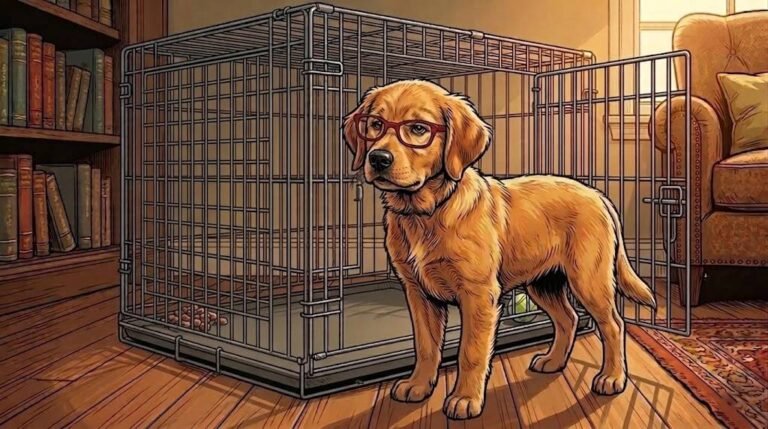
What actually needs to be in place before the first day is more specific than most people plan for: a crate of the right size, in a location the dog will actually use; gates that close off areas that are not yet safe; a collar and leash that fit; cleaning supplies for the accidents that will happen regardless of how well the training goes; and somewhere for the dog to sleep that is not a decision made at eleven o’clock on the first night. None of these are complicated. All of them are easier to sort out before the dog is already in the house, investigating everything that has not yet been secured.
Prepare the environment before the dog arrives, not during.
Underestimating the First Weeks
The expectation is usually that the dog will settle in within a few days. For puppies, the first weeks can involve no established routine, stress around separation, unpredictable sleep, and a learning curve on both sides that takes longer than most people expect. For adult dogs, the decompression period — the time it takes for a dog in a new environment to begin showing their actual temperament rather than their stressed one — can run from weeks to months, particularly for dogs with anxious or fearful histories.
The Therapist did not expect my first weeks to be as demanding as they were. What she did, which I maintain saved us both considerable difficulty, was treat each problem as information rather than failure — mapping what triggered the behaviour, what reduced it, and what I was actually trying to communicate. It was methodical in a way I found both impressive and slightly alarming, given that I was the subject of the methodology.
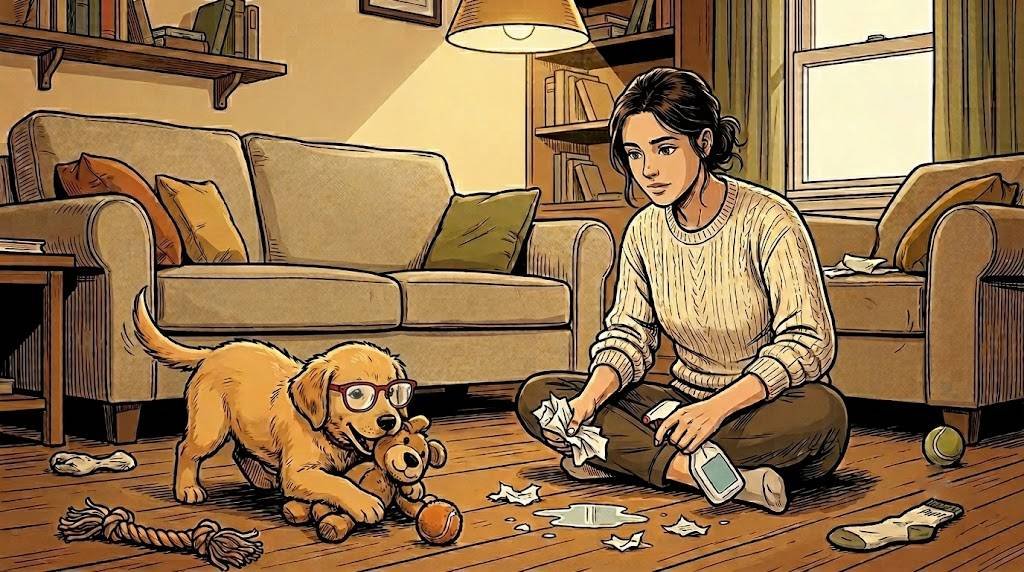
The difficulty of the first weeks is not evidence that the decision was a mistake. It is evidence that a dog has arrived and does not yet know what the rules are, where it is safe, or whether this particular set of humans can be trusted. That knowledge takes time to build. An owner who expects this will manage it differently from one who expected to be an exception.
Expect the first weeks to be harder than you think. Plan for that, rather than hoping to be an exception.
Thinking Love Is Enough
It is not, and this is the kindest version of that sentence.
Love is necessary. It is genuinely necessary — a dog who is not loved is a dog whose needs will not be noticed, whose signals will not be read, whose difficulties will not be taken seriously. But love does not replace structure, consistency, or preparation. It does not teach a puppy what is and is not acceptable. It does not manage a dog’s anxiety, redirect a dog’s energy, or compensate for a mismatch between the dog’s needs and the household’s capacity to meet them.
Loving a child is essential. It is not the same as knowing bedtime, school forms, shoes, snacks, and why silence in another room is suspicious. The love is the foundation. The rest is the structure built on it, and the structure requires deliberate effort regardless of how much the love is present.
This is not a criticism of anyone who has loved a dog well and still struggled. It is a note that the struggle usually comes from the gap between love and preparation — and that gap is closable, before the dog arrives, in ways that are much harder to close after.
Love the dog you are getting. Also prepare for them. Both are required.
Most of these mistakes share the same root: a version of yourself that was more capable, more prepared, and more consistent than the one who will actually be present when the dog arrives on the first morning. That version is worth aspiring to. The gap between who you intend to be and who you currently are is not a reason not to get a dog — it is a reason to prepare more carefully, choose more honestly, and give yourself and the dog a better starting point than optimism alone provides.
Alfred’s Rule: prepare for the owner you are, not the one you intend to become.
Professor Alfred
Arrived Into Forty Percent Preparedness, Now Fully Installed
FAQ
What are the most common mistakes before getting a dog?
Choosing a breed for the wrong reasons, overestimating how active or consistent you’ll be, skipping breed and source research, leaving home preparation until after the dog arrives, underestimating the first weeks, and assuming love alone is sufficient preparation.
How do I know if I’m ready to get a dog?
Honest self-assessment matters more than enthusiasm. Ask whether your average week — not your best week — can support a dog’s actual needs in terms of time, energy, and consistency.
How long does it take for a dog to settle in?
Puppies typically need several weeks to establish routine and reduce separation stress. Adult dogs, particularly those with anxious histories, may go through a decompression period of weeks to months before showing their actual temperament.
What research should I do before getting a dog?
Three things: understand the breed’s energy level and temperament history, ask specific questions about the source (breeder health testing or rescue background), and account for breed-specific health, grooming, and behavior risks before committing.