Human Foods Dogs Can Eat: A Safe Foods Guide
Yo, food lovers.
Answer First
Most human foods aren’t dangerous — but the wrong ingredients are. The biggest risks are toxic items like chocolate, grapes, onions, garlic, and artificial sweeteners, plus seasoning and hidden additives. Stick to plain, unseasoned foods in small amounts and avoid anything processed or mixed. If you’re unsure what’s in it, don’t feed it — and if your dog eats something questionable, call your vet.
The kitchen isn’t dangerous. Guessing is.
Here’s the longer story of how I figured all this out. Mostly by watching. Occasionally by miscalculating.
An Afternoon in Big Guy’s Kitchen
It’s Saturday afternoon. Big Guy thinks that it’s time to make dinner. He walks to the fridge and opens it. So I have to be in position. He starts pulling things onto the counter. I read the lineup on the counter. Chicken, vegetables, onion, rice, bananas. This is going to be soup, and the bananas are dessert.
You know how you can tell what someone’s making just by what comes out of the fridge first? Onions out first means it’s a base, not a salad. Rice on the back burner means it’s a side, not the main event. Chicken still in its packaging means we have at least an hour. You read the kitchen the same way I do. I just have a better vantage point, of course.
Today’s lineup tells me four things will happen. Fruit, vegetables, protein, carbs — in some order. Some of what I know about each category I mostly learned by accident. Especially the foods a dog can’t eat — because I don’t let any bite reach the floor unsupervised. Before we get into the categories, though, there are some general rules about sharing food that apply across all of them. We’ll start there.
Quick Diagnosis: Can Your Dog Eat This — Or Regret It Later?
- If it’s plain, unseasoned meat → usually safe in small amounts
- If it’s cooked with garlic, onion, or heavy spices → not safe
- If it’s sweet and labeled “sugar-free” → dangerous (xylitol risk)
- If it’s fruit with seeds, pits, or grapes → skip it completely
- If you don’t know exactly what’s in it → don’t gamble
One rule before we go any further.
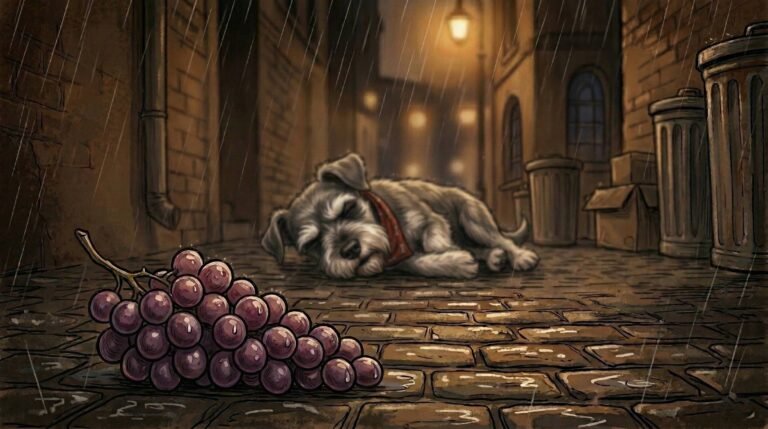
Chocolate. Grapes. That fake sweet smell you can’t quite place. These aren’t “maybe” foods. These are mistakes waiting to happen. You think a small bite won’t matter. That’s how it starts. I’ve seen dogs go down from less. You check labels before you eat something weird. Same logic. Read what’s in the food. If you can’t read it, don’t feed it.
How to Share Without Wrecking Things
The mistake people make with safe human foods isn’t usually the food itself. It’s the amount, the speed, or the surprise of it.
Here’s the rule I’d give you if I were the kind of dog who gave rules. Mostly I just break them. Treats and table food, combined, should not exceed about ten percent of your dog’s daily calories. The other ninety percent is regular dog food, because regular dog food is balanced for what a dog actually needs in a way that scraps from your plate cannot match.
Here’s why this matters more than it sounds. More than half the dogs in most countries are overweight or obese, and the leading cause is exactly what we’re talking about — extra food from the human side of the table. Safe foods are still calories. A few too many “small” pieces every day, across months, and a healthy dog turns into a dog with joint trouble, breathing trouble, and a shorter life. The food being safe is not the same as the food being free. I would break this rule if I could. Big Guy doesn’t let me. This is one of the things I am, in retrospect, grateful for.
So the rule isn’t just “what’s safe” — it’s “what’s safe and in what amount.” Human food fills in around the edges. It’s seasoning on a life, not the meal itself. I would prefer this not to be true. It is true anyway.
When you’re introducing a new food, the rule is even simpler. One new food at a time. A small amount. Then wait twenty-four hours. This is not because dogs are fragile. It’s because if something doesn’t agree with your dog, you want to know what something is. If you give a dog a piece of strawberry, a slice of banana, and a chunk of sweet potato in the same hour, and the dog has a problem that evening, you now have three suspects and an evening of laundry. I don’t think it’s fun.
The signs to watch for the first time you give your dog a new food are not subtle. Vomiting. Loose stools. Excessive drooling. Lethargy. Itching or hives. Most of these resolve on their own within a day. None of them mean your dog is dying. They mean this particular food doesn’t belong on your dog’s list. Take it off and try something else.
Big Guy did this with me, although neither of us would have called it a system at the time. The first time I got a piece of carrot, he watched me for the rest of the evening like he was waiting for a verdict. The verdict was that I wanted more carrot. We moved on. The first time I got plain yogurt, the verdict was different, and it was embarrassing. So, yogurt has been off my list ever since. You learn what works on your dog by trying small amounts and paying attention. You do not learn it by reading a chart on the internet, including this one. The chart helps. The chart is not the dog.
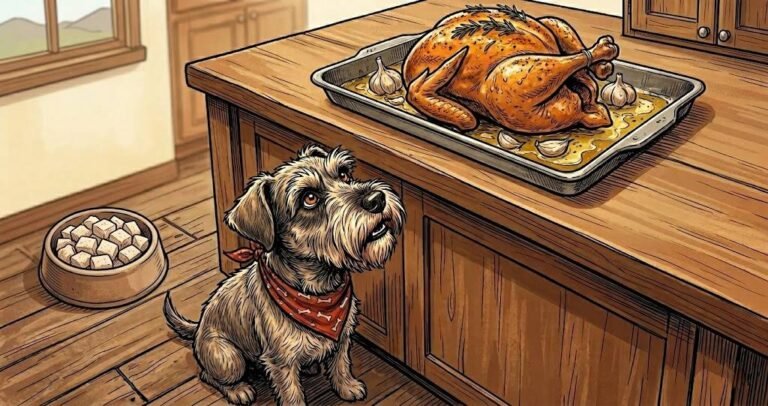
One more thing before the categories. Plain is the magic word. Plain chicken. Plain rice. Plain carrot. Plain banana. Plain Ham… ooops, that’s me, I’m not plain. The moment a food gets seasoned, sauced, fried, sweetened, or shared with onion or garlic, it crosses out of the safe column into a more complicated column. A piece of plain roast chicken is a snack. A piece of garlic-rosemary roast chicken from the same bird is a problem. Same chicken. Different food.
Now the categories.
Which Fruits Are Safe for Dogs — And Which Aren’t
The bananas sit on the counter for most of the afternoon. Untouched. This is how I keep time in this kitchen. As long as the bananas are still untouched, soup is still the topic. The bananas are the closing act.
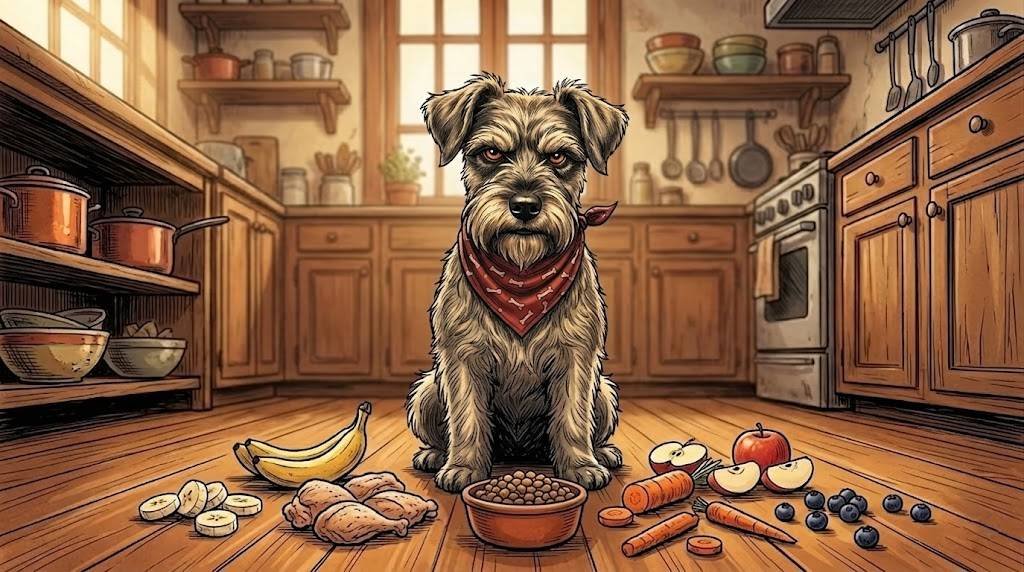
Most fruit is fine for dogs in small amounts. Apples without the seeds — sliced, raw, crisp, a decent training treat. Bananas in small pieces — sweet, soft, easy on a dog’s teeth, but high in sugar so not an everyday food. Blueberries — small, low-calorie, full of antioxidants, and one of the rare fruits Big Guy hands over without slicing first. Strawberries — fine in moderation, naturally sweet, and a good summer treat. Watermelon without seeds and without rind — mostly water, refreshing on a hot day, surprisingly hydrating. Pears without the seeds, in small pieces. Mango without the pit and the skin, sliced thin. Cantaloupe in small amounts. Pineapple, fresh, in small pieces — some dogs love it, some can’t handle the acid.
Seeds and pits matter for reasons that are not optional. Apple and pear seeds contain trace cyanide compounds, which become a problem in quantity. Stone fruit pits — peaches, plums, cherries, mango — are choking hazards on top of being mildly toxic. The Big Guy cores and slices the apple before he gives it to me.
The fruit you skip is shorter but firmer. Grapes and raisins are off the list at any amount. Avocado has its own problems — the flesh is mostly fine, but the pit and skin contain persin, which dogs handle worse than humans. Citrus — oranges, lemons, limes, grapefruit — is acidic enough to upset most dog stomachs even when it’s not technically toxic. Cherries with pits intact. Persimmons. Unripe tomatoes if you’re counting tomatoes as fruit, which technically they are. As a rule, if a fruit comes with a warning label for human babies, it deserves a second look for dogs.
The thing about fruit is that it’s sugar. Natural sugar, but still sugar. Treats, not staples. Two or three blueberries. A slice of apple. A few small pieces of banana once or twice a week. That’s the right scale. You eat fruit when you want something sweet but not full-on dessert. Same logic for me. The difference: you stop. You must know by now, I would not stop. I have never stopped. Stopping is not a thing I do. Half a fruit bowl is a vet visit.
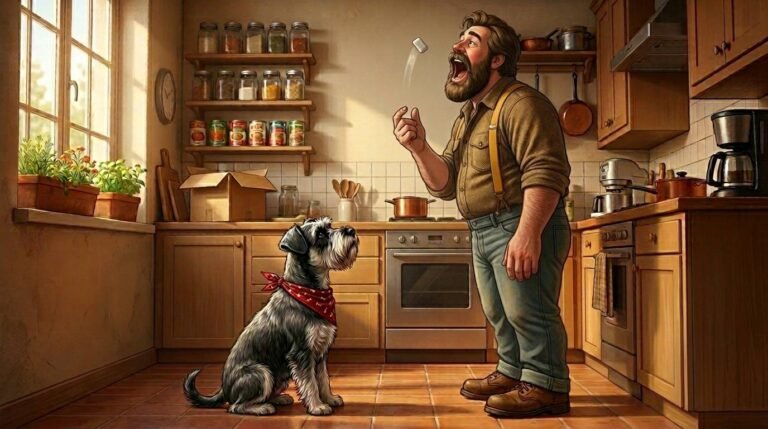
When Big Guy finally picks up a banana, late in the afternoon, he peels it standing at the counter. He slices it. One slice misses the cutting board and almost lands on the tile near my left paw. But my mouth is faster than that slice of BANANA.
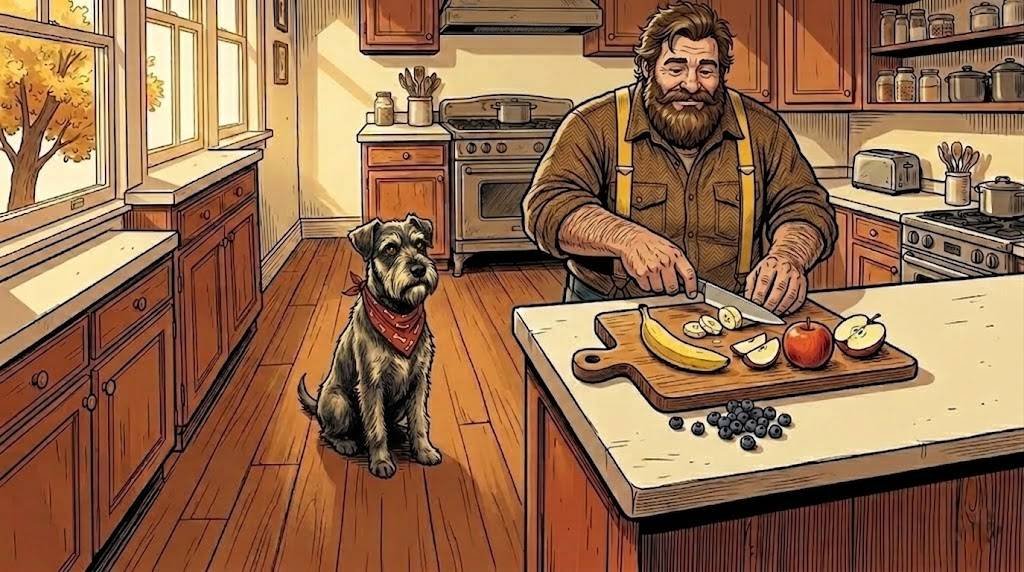
Sorry. Got ahead of myself. The slice is mine now. We do not discuss whether this was an accident. We do not discuss most things. The slice is sweet and slightly weird in texture and gone in approximately one second.
Safe vs Unsafe Vegetables for Dogs
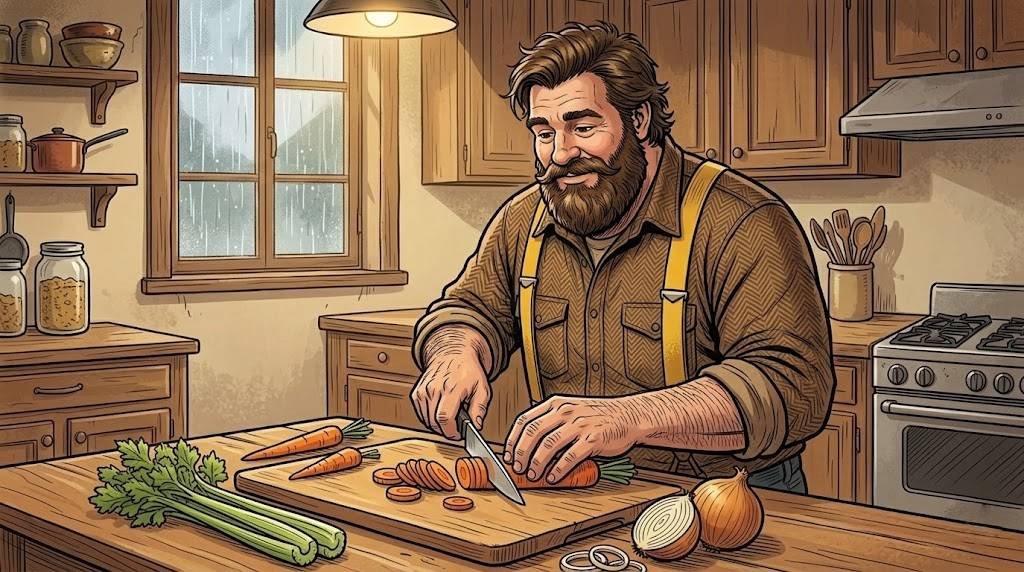
Big Guy lays the cutting board down and starts on the vegetables. Carrots first. Then celery. Then he reaches for the onion.
This is where it gets interesting. The cutting board becomes two zones. Carrots and celery work on one end. The onion gets the other end. When he’s done with the onion, he wipes the knife and washes his hands before going back to the rest. The geography of the board is the rule.
Most vegetables are dog-safe in reasonable amounts. Carrots raw or cooked — crunchy, low-calorie, double as a chewing exercise, possibly help with teeth. Broccoli in small portions — fine in small amounts but contains compounds that can cause gas in larger ones, so a few florets, not a head. Spinach cooked, in small amounts. Pumpkin plain, cooked, no spices — a household staple for dog stomachs that are misbehaving, often recommended by vets to help with both diarrhea and constipation. Sweet potato baked or boiled, plain — naturally sweet, dense, easy to digest. Cucumber — mostly water, low-calorie, good summer treat. Green beans plain, cooked or raw — often used as a low-calorie filler when a dog is on a diet. Zucchini plain. Bell peppers — fine, especially red, which has more vitamins than green. Celery — fine in small amounts and good for breath.
Cooked is generally easier on a dog’s stomach than raw. The exception is carrots, which are fine raw and double as a chewing exercise. Big Guy mentioned to the vet once that carrots help my teeth. I’m skeptical. I eat them anyway because they’re there and I eat everything and everytime. Most of my philosophy reduces to that sentence.
The vegetables you skip are the ones that share a section with poison. Onions and garlic are off the list — both contain compounds that damage dog red blood cells, and the toxicity stacks over time even in small doses. This includes onion powder and garlic powder, which are sneakier because they hide in seasonings. Raw potatoes contain solanine and aren’t safe. Cooked plain potatoes are fine. Tomatoes are tricky: ripe red tomato flesh is mostly okay, but the green parts, leaves, and stems are toxic. Mushrooms from the grocery store are usually fine. Mushrooms from the yard are how dogs end up at the emergency vet at three in the morning. Believe me. If somebody knows it well, that’s me. Rhubarb leaves are toxic. Asparagus raw is hard to digest, cooked is fine but not particularly worth the trouble.
You separate raw chicken from raw vegetables on the same counter when you cook. Same instinct. The cutting board has zones. Mine just has different zones than yours. You’re protecting yourself from cross-contamination. Big Guy is protecting me from a vegetable I would otherwise inhale without consulting anyone.
A piece of carrot rolls off the board toward me. I catch it before it stops moving. This is not Big Guy’s mistake. This is part of the system. The system is good.
What Protein Dogs Can Eat Safely
The chicken goes into the pot with water. Big Guy turns the burner on low. Now I have time to talk to you guys.
Most plain, cooked, unseasoned meats are fine for dogs. Chicken cooked, no bones, no skin, no seasoning — the workhorse of dog-friendly human protein, easy on most stomachs, high in lean protein. Turkey under the same rules — plain, cooked, no skin, no bones. Beef lean cuts, cooked, plain — fattier cuts cause problems. Pork plain and cooked, but always cooked through, never raw or undercooked, and never processed pork like ham or bacon, which are loaded with salt and preservatives. Fish plain, cooked, deboned — salmon and white fish are popular, and salmon is high in omega-3s. Fish bones are dangerous in the same way poultry bones are. Eggs boiled or scrambled with no butter, no salt, no seasoning. Plain cooked eggs are one of the most reliable easy-protein options for dogs. Plain Greek yogurt in small amounts, if your dog tolerates dairy — many dogs do, some don’t. I am one of the some.
Seasoning is where most home-cooked meat goes wrong — salt, garlic powder, onion powder, butter, pan drippings, marinades. A dog’s stomach handles plain protein well. Seasoned protein is a different animal, sometimes literally. Have you ever met with spicy Ham? You wouldn’t like that dog.
The list of protein to skip is short and absolute. Raw meat carries salmonella and campylobacter risks dogs handle worse than the internet sometimes claims. Fatty cuts and trimmings are a known trigger for pancreatitis, which is serious and expensive and not the kind of adventure you want to share with your dog. Cooked bones — especially poultry bones — splinter when chewed. They go through a dog the wrong way. I’ll leave the rest to your imagination. Processed meats like bacon, ham, sausage, deli meat, hot dogs — too much salt, too much fat, too many preservatives, sometimes onion or garlic in the mix. Pan drippings and gravy carry the seasoning of whatever was cooked, which is the part that’s the problem.
The chicken finishes cooking. Big Guy lifts it out of the pot. He pulls the skin off and sets it aside. He starts stripping the meat from the bones. The meat goes into two places: larger pieces back into the soup, smaller pieces into a separate bowl. That separate bowl is mine.
Then the part I watch most carefully. The bones go into a third bowl. That bowl goes to the back of the counter — out of jumping range, out of reach, out of the question. Bones in this house do not splinter inside me. They splinter in the trash, where they belong.
The smaller bowl, the one with my pieces in it, sits on the counter until dinner. I can see it from here. I have waited longer in worse places for worse rewards. This bowl is the easiest paycheck of my career.
Eggs work too — Big Guy boils one some mornings, peels it, and at the critical moment a small fragment would finds the floor. But I am there.
Carbs Dogs Can Eat — And What to Avoid
While the chicken cooks, the rice is going on the back burner. It’s quiet. Rice doesn’t announce itself. It just gets done.
Most plain carbs are fine for dogs in moderation. Cooked rice — white or brown, plain, no salt, no oil. White rice is gentler on an upset stomach; brown rice has more fiber. Plain cooked pasta without sauce. Plain oatmeal cooked in water, no sugar, no flavoring — a good occasional breakfast topper. Baked sweet potato plain — already covered in vegetables but worth repeating because it bridges both categories. Plain bread in small amounts, occasionally — not toxic but not nutritionally useful. Plain crackers — fine in small amounts, but watch for salt and seeds. Plain popcorn without butter or salt — fine occasionally, but kernels are choking risks.
Carbs are not where the excitement of food lives. They have a job — bulk out a meal, sit easy on the stomach, soak up things the body is having trouble with. They’re the supporting cast.
The carbs to skip are the ones humans flavor up. Seasoned pasta. Garlic bread — the garlic is the problem. Anything with onion or garlic powder. Bakery items with sugar or chocolate. Sweetened cereals. Buttery, salty popcorn. And — most importantly — anything that might contain xylitol. Xylitol is in some peanut butters, some baked goods, some sugar-free gum. It is catastrophic for dogs in tiny amounts. When in doubt with anything labeled sugar-free, check the ingredients before you share. This is not the place to wing it.
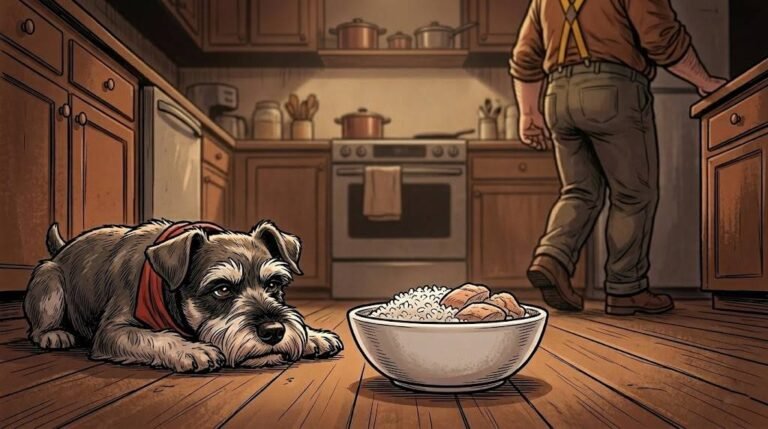
There was a day my stomach quit on me. The details are not flattering and not interesting. Big Guy boiled rice. Plain. He gave me small portions for two days, sometimes mixed with a little plain chicken. By the third day I was upright and I wanted to eat everything again.
Plain rice and plain chicken or turkey is what most vets recommend when a dog’s stomach goes sideways — easy on the system, calms things down, gets the gears moving again. It can happen to any dog. If it happens to me again, I know what’s coming. Big Guy doesn’t ask. He just starts boiling water.
The rice itself isn’t exciting. I’ll grant it that. But there’s a category of food that exists not because it’s fun but because it’s necessary. Rice belongs there. I respect the strategy. I just prefer not to need it.
My rat friend, George considers rice “the meal a body asks for after losing an argument with itself.” George is not wrong. I have not told George this.
When Things Go Wrong
Most of the time, sharing safe human food with a dog is uneventful. The food goes in, the dog is pleased, life continues. Sometimes it doesn’t go that way. Knowing what to do when it doesn’t is part of the deal.
The signs that a food didn’t agree with your dog are usually obvious within a few hours, sometimes a day. Vomiting. Diarrhea or unusually loose stools. Lethargy — not regular sleeping but a kind of flatness, less interest in things they normally care about. Excessive drooling. Itching, hives, or facial swelling, which can be allergic. Gas that’s worse than normal — and the bar there is, admittedly, individual.
Most of these resolve on their own within a day. A dog with mild stomach upset usually benefits from a short break from regular food, plenty of water, and a meal or two of plain boiled chicken and plain rice. This is the same combination Big Guy keeps in his fridge for me, and the same combination most vets will recommend for run-of-the-mill upset stomachs in healthy adult dogs.
Some signs are not in the wait-and-see category. Call your vet immediately, or contact a 24/7 pet poison hotline, if your dog has eaten any of the following: grapes, raisins, onions or garlic in any meaningful amount, xylitol, chocolate, macadamia nuts, raw bread dough, cooked bones, or anything with significant amounts of caffeine or alcohol. Don’t wait for symptoms. Some toxins take hours to do their damage, and the window for treatment is narrowest at the start. The toxic foods guide covers what to do in detail.
The signs that warrant a same-day vet call even without a known toxin are: repeated vomiting, vomiting with blood, bloody diarrhea, inability to keep water down, severe lethargy or collapse, swollen abdomen, difficulty breathing, uncoordinated walking or seizures. None of these are wait-it-out symptoms. They’re a phone call.
Two numbers to keep somewhere visible. The ASPCA Animal Poison Control Center at 888-426-4435 — there’s a consultation fee, but they’re available twenty-four hours a day, seven days a week. The Pet Poison Helpline at 855-764-7661 — same kind of service, same kind of fee. Your regular vet is the first call. These are the second call when your regular vet is closed.
Most safe-food sharing never reaches any of this. But the difference between a confident dog owner and an anxious one is mostly knowing what to watch for and having a plan for the rare day it matters. Big Guy has a plan. I am the plan’s main beneficiary. The plan is going great.
What This Looks Like in a Real Week
To make this practical, let me describe a regular week — not a special one, just an average seven days at our house. The amounts are small, the rotation is varied, and nothing is dramatic.
Monday morning. Big Guy boils an egg for himself. The peeling process is, as usual, imperfect. A small piece of egg white finds the floor. I handle it. One bite of plain egg, before my regular breakfast.
Tuesday afternoon. Big Guy cuts an apple for a snack. The core goes in the trash. A slice without seeds comes my way. One thin slice of apple, mid-afternoon.
Wednesday evening. Big Guy sautés vegetables for himself — carrots, peppers, zucchini, with garlic and salt I will never receive. Before he adds the seasoning, he sets aside a small portion of plain carrot and zucchini. A spoonful of plain vegetables, alongside dinner.
Thursday. No human food. Just regular meals. Some days are like that. I do not complain on the record.
Friday morning. Big Guy makes oatmeal for himself. He gives me a tablespoon of plain oatmeal, no sugar, no anything, before I get my regular breakfast. One tablespoon of plain oatmeal.
Saturday. The big day. The soup. As described. A full bowl of plain chicken, plain rice, and a few carrot rounds, as part of dinner.
Sunday. Big Guy grills chicken for the week’s lunches. Before he marinates the rest, he sets aside a few plain pieces, cools them, and stores them in a container with my name on it.
That’s a week. It’s not elaborate. It adds up, across the week, to a small percentage of my total calories — well under the ten percent rule. It rotates through different categories without overloading any single food. It’s planned without being fussed over. Some treats fit into a week, no extra effort, no production. That’s what good sharing looks like. Not constant. Not none. Steady.
You don’t need to copy this exactly. Your dog isn’t me, your kitchen isn’t this kitchen, and your week doesn’t have to look like ours. Use it as a shape. The shape is: small portions, varied across the week, plain, and well under any meal a human is also eating from.
The Soup Is Done
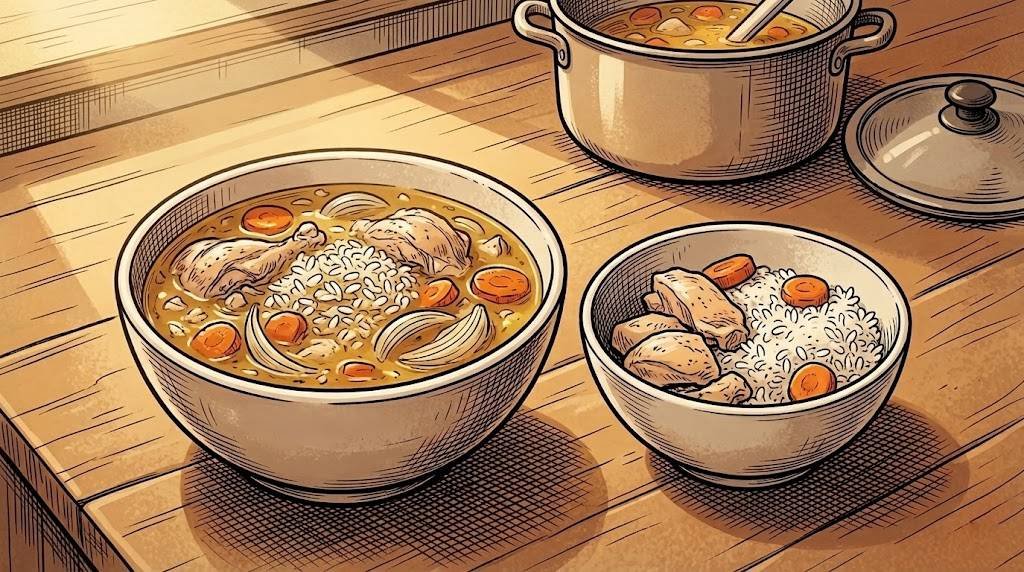
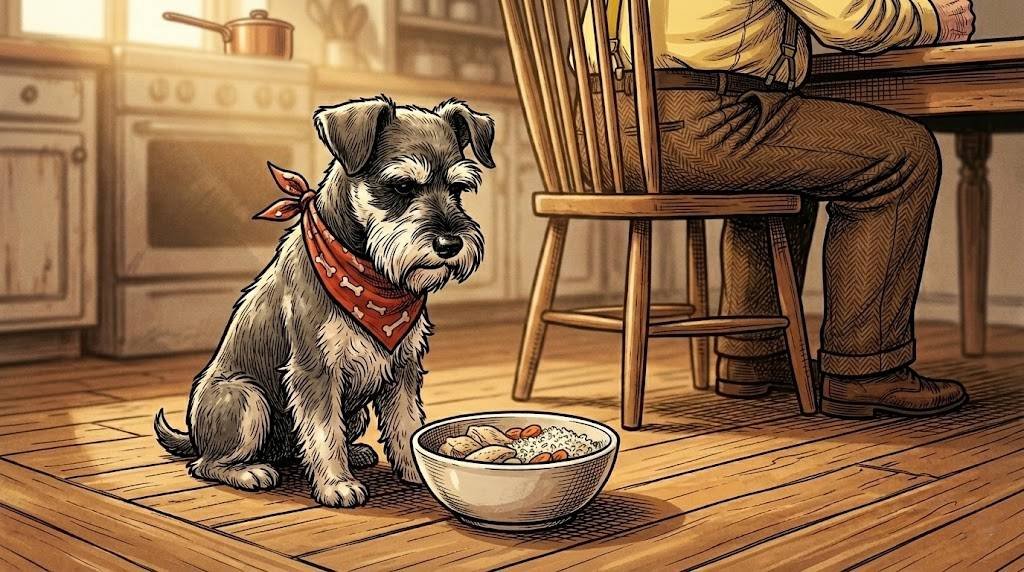
The soup is done around six. Big Guy ladles a bowl for himself — broth, rice, chicken, vegetables, onion. He sets a separate bowl on the floor for me — plain chicken pieces, plain rice, a few carrot rounds. No onion. No bones. No broth. The soup he eats and the soup I eat are not the same soup. They came from the same pot. They are not the same.
This is what to take with you. The myth that human food is bad for dogs is just that — a myth. The trouble is specific. Onions, garlic, grapes, xylitol, chocolate, cooked bones, fatty trimmings, raw meat, certain seeds and pits. Outside that list, the human kitchen has more dog-safe food than most people realize, and a dog can eat alongside a human household every day if the rules are clear and the handling is careful.
George would say this whole guide is excessive. George thinks you should eat what’s available and stop overthinking. George has survived a lot on this philosophy. George has also lost a tail-tip on this philosophy. The careful version is the version I get to write.
Tomorrow there will be a new afternoon, new ingredients on the counter, new things to read from where I’m lying. Right now, though, there’s a bowl on the floor. The bowl is closer than the keyboard. You know what I’m going to do.
The Rules That Keep You Out of Trouble
Apples are fine. Lose the seeds.
Bananas work, but not every day.
Blueberries are easy — small, safe, nothing to argue about.
Grapes are off the list. No amount, no exceptions.
If it says sugar-free, it’s not for me.
Onion and garlic don’t belong in my food, not even a little.
Seeds and pits are not optional mistakes.
Plain food is where things stay simple. Seasoning is where it goes wrong.
Same kitchen. Different outcome. Depends on whether you know what you’re looking at.
Ham
Resident Kitchen Floor Strategist
This article is general information, not veterinary advice. If your dog eats something toxic, follow this emergency protocol and contact your vet immediately.
Our content is for educational purposes only. For medical concerns, always consult a qualified professional.