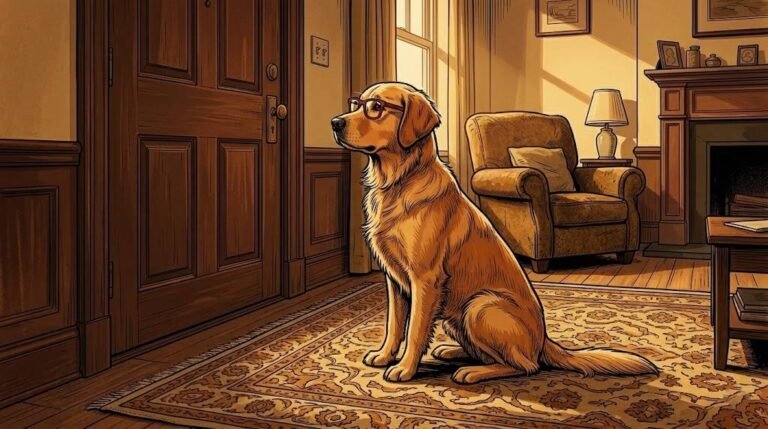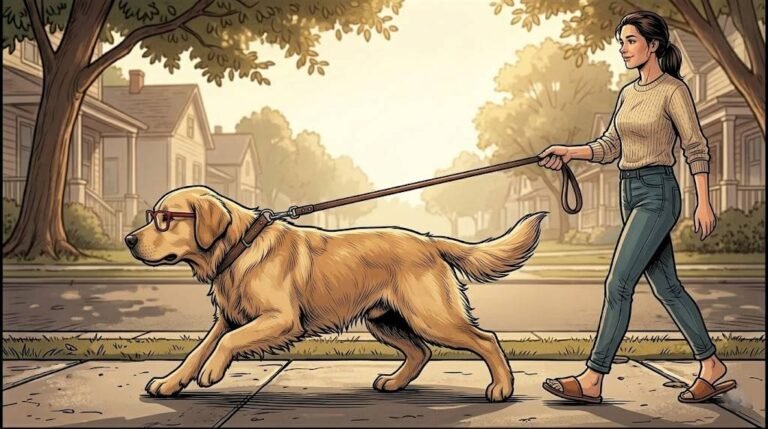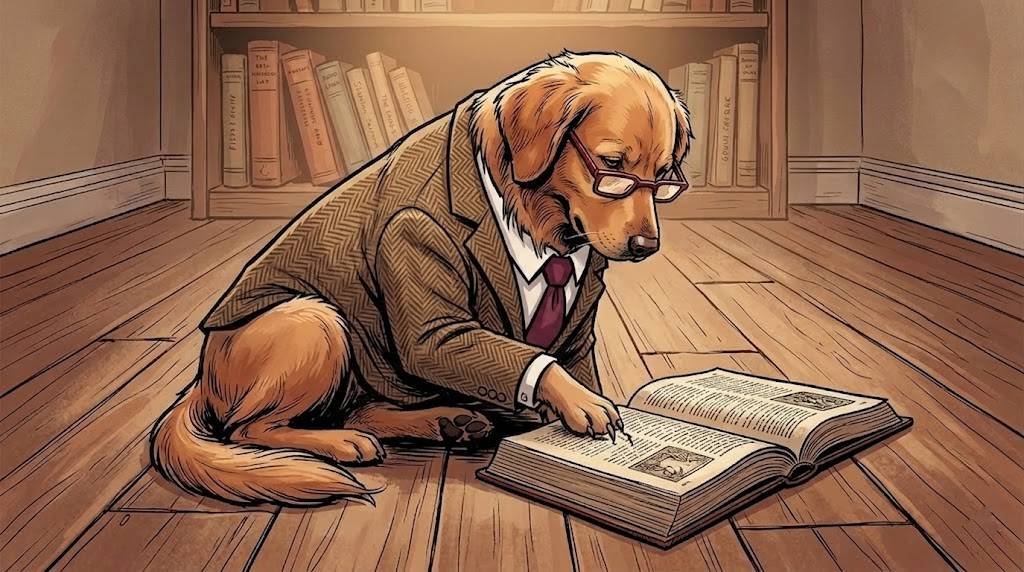
How to Choose the Right Dog (Before You Fall in Love With a Breed)
Hello, two-leggers.
Answer first
Choosing the right dog means matching a dog to the life you actually live — not the breed you find most compelling, not the one that appeared in a film you loved, not the one whose puppy photo made you lose seventeen minutes on a Tuesday afternoon. Start by examining your average week: hours away from home, realistic exercise time, available space, budget, and household composition. Before you look at a single breed, write down your real Tuesday.
Your real Tuesday is the decision.
I do not know the official decision logic behind my own arrival. I suspect my eyes committed a tactical operation at a critical moment. The Therapist has never confirmed this.
If this is your first dog — and I ask this with genuine curiosity, not judgment, because we all started somewhere, even dogs who now believe themselves professors — the honest starting question is not which breed looks the most compelling in photographs. It is which dogs tend to forgive a first-timer’s mistakes while you are still learning what you are doing. I did not arrive with an instruction manual, and neither will your dog, but some dogs are considerably more patient with the gap between your intentions and your execution. The best dogs for first-time owners tend to share a few specific traits worth knowing before you fall for anything with a dramatic backstory or a spectacular coat.
The most expensive mistake in dog ownership
It is not a vet bill, though those can be substantial, and I say this as someone whose teenage phase required The Therapist to consult what I understood to be a very thick book with a worried expression.
The most expensive mistake is choosing a dog for the wrong reasons — specifically, for how a dog looks, or how it made you feel the moment you saw it, or because someone you respect owns one and their life appeared to be going well. These are all understandable reasons. None of them are the right reasons.
Consider the following situation, which is common enough to qualify as a pattern: you accept a job because the lobby is beautiful and the salary sounds right and the people seem genuinely pleasant at the interview. Six weeks later, you discover that the role involves sixty-hour weeks, a supervisor who checks in at all hours, and a commute that adds forty minutes in each direction. None of this was hidden, exactly. You simply did not think to ask before you said yes.
A dog is a ten-to-fifteen-year commitment with opinions. (I have many. The Therapist will confirm this, if asked.) A Husky is magnificent. A Border Collie is astonishing — focused and fast and capable of things that make other dogs look like amateurs. A French Bulldog has a face that causes rational adults to make financial decisions they did not plan to make. None of this is wrong information. It is simply not the information you need first.
There is, incidentally, a fairly reliable list of the specific ways people get this wrong — I have seen variations of the same mistake enough times, secondhand through The Therapist’s friends and their considerably less well-adjusted dogs, that it stopped feeling like coincidence. The most common mistakes people make before getting a dog tend to repeat themselves in the same handful of patterns, if you would like to know exactly which trap you are about to walk into before you walk into it.
The information you need first is: what does this specific dog actually require, and do I actually have that — not on weekends, not on my best week, but on a normal, unremarkable, slightly disappointing Wednesday?
Write down what a typical weekday looks like before you look at a single breed.
What your life actually looks like
There is a gym membership designed specifically for who you intend to become. You have probably purchased it. Your future self was going to go four times a week. Your future self had admirable discipline and comfortable shoes. Your present self renewed the membership for three consecutive years and went, on average, eleven times annually, which works out to approximately once per five weeks, which is a commitment I respect for its consistency if not its frequency.
Choosing a dog for your future self is the same mechanism with higher stakes, because the dog cannot be cancelled by direct debit.
Have you ever asked yourself — and I encourage you to do this now, perhaps with a piece of paper — what your average week actually contains? Not the week where everything goes well and you have extra energy and the weather cooperates. The week where you are tired from Tuesday onwards, you have three things overdue at work, and the last thing you want after dinner is forty-five minutes of purposeful outdoor activity?
That week is when the dog still needs walking. That week is when the high-energy breed you chose because it seemed like it would encourage healthy habits is instead demonstrating what happens when its needs go unmet. The demonstrations involve furniture. I speak from personal experience, with some residual embarrassment.
How many hours are you away from home on a typical workday? How much genuine exercise time do you have — not theoretical exercise time, but actual time, in clothes that can get dirty, in weather that may not be ideal? Do you have outdoor space, or is everything mediated through a lead and a pavement? Are there children in the home, or other animals? What is your actual budget, including the unexpected expenses, of which there will be some, because that is simply how living with another creature works?
Two of those questions deserve more than a passing thought. How many hours a dog can reasonably be left alone is not a question with one universal answer — it depends on the dog, the age, the breed, and several other variables The Therapist looked up so I would not have to. And the budget question is not just food and the occasional vet visit; it is the full first-year cost of owning a dog, laid out properly elsewhere.
Answer the honest version of these questions — not the optimistic version — before you proceed.
Quick diagnosis: which dog decision are you about to make?
- If you want a dog for how it looks → pause; appearance predicts nothing about compatibility (I know this personally — I am very handsome and still destroyed a sofa)
- If your plans sound more active than your actual Tuesdays → choose for the life you live now
- If you work long hours most days → consider age, energy, and independence before breed
- If you think small dog means easy dog → check temperament, not size
- If you are not sure which dog → meet adult dogs before committing to a puppy
Energy is not a preference, it is a commitment
There is a ball in the garden right now — I am aware of it, I have been aware of it since we started this section, and I am choosing to continue — but the point I was making is important.
I will tell you about a period of my life that The Therapist and I have both, I think, agreed to remember selectively.
Between approximately eight and eighteen months of age, I was — and I am choosing this word carefully, because I believe in accuracy — a great deal. I barked at things that deserved barking at and, in the interest of thoroughness, several things that did not. I pulled on the leash with the conviction of an animal who had somewhere extremely important to be and had not yet learned to explain where. I conducted what I understood to be a reasonable structural assessment of the sofa. I developed separation anxiety severe enough that The Therapist redesigned her morning routine around it — not because she was required to, but because she figured out, through what I can only describe as impressively careful observation, that my anxiety had a shape and a pattern, and that the pattern could be worked with.
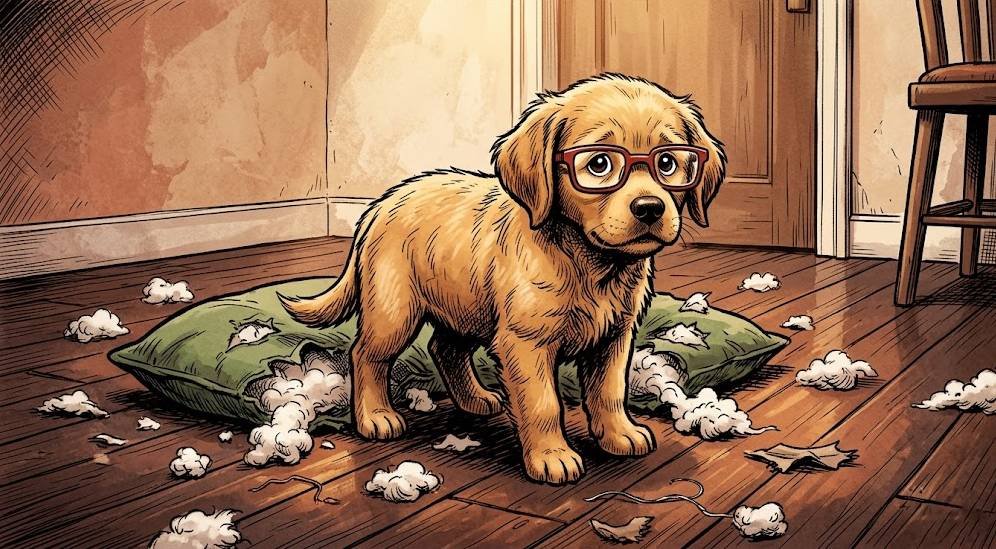
She did not simply endure the chaos. She mapped it, and then she changed it.
This is, I think, the relevant point: I was not a calm dog who had an unfortunate few months. I was a high-energy golden retriever at peak adolescence, and the energy did not go away. It was redirected — into training, into fetch, into a structured morning routine that I now maintain with great personal pride and some enthusiasm. But the energy was always there, and The Therapist chose to work with that rather than against it, which required her to actually understand what she had taken on.
There is a type of person who describes themselves as “fairly active.” When you ask what a typical week looks like, the answer involves two short walks and one longer one on the weekend when the weather is reasonable. This is a perfectly acceptable life for a human being. It is not usually a life that supports many Border Collies, young Labradors, or Weimaraners well. It may suit a Basset Hound. It very likely suits a Shih Tzu. The dog is not wrong for needing more. But the mismatch will express itself, and it will not express itself quietly.
Match the dog’s daily exercise requirement to what you can reliably provide on your worst week — not your best.
The size trap
Small dog does not mean easy dog. I want to say this clearly, because the assumption is widespread and the consequences are specific.
A Miniature Schnauzer, like my friend Ham is not a decorative object that occasionally requires filling. Ham has views. He expresses them. He is also significantly faster than me over a short distance, which I mention purely as a factual observation and not because it still bothers me in any way. A Jack Russell Terrier was bred to pursue prey into underground tunnels and deal with it independently. Some Chihuahuas behave like apex predators in a compact format.
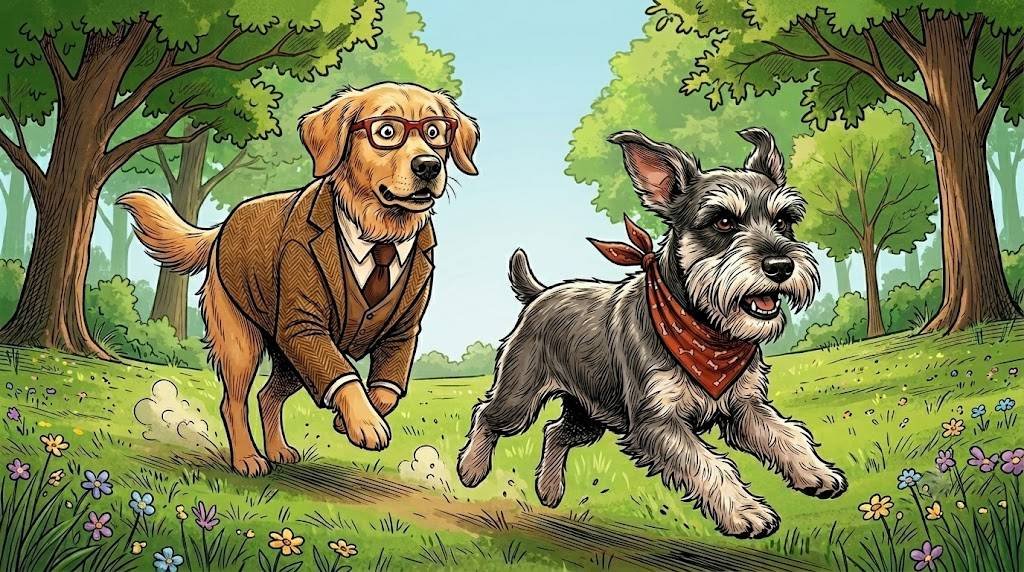
This is like buying a small car because parking seems more manageable, and discovering only afterward that you have four children, two of whom require car seats, and a weekly commitment to transporting things that do not fold. The size solved one problem while leaving the actual problems intact.
The counterpoint is equally important: a Greyhound is one of the fastest land animals on earth and can spend most of its indoor hours perfectly motionless on a comfortable surface. Many Great Danes are enormous and can adapt surprisingly well to apartment living if their exercise and comfort needs are met. Size, in both directions, tells you less than you would expect.
What tells you more: what was this dog bred to do? A dog bred to herd will attempt to herd. A dog bred to hunt will follow its nose into situations. A dog bred for companionship will need companionship. The original purpose is not an interesting historical detail — it is a behavioral prediction.
Look at what the breed was originally bred to do. That will tell you more about daily life with this dog than its size ever will.
If you are still working out which breed actually fits the answers you wrote down earlier — and there is no shame in needing help with this part, I required considerable assistance figuring out what I was, temperamentally speaking, before The Therapist did the figuring for me — that is its own decision, worth working through properly.
And once you have a breed in mind, there is a second, quieter decision waiting underneath it: how much does predictability actually matter to you? A purebred dog offers a reasonably known quantity — temperament, size, energy, the general shape of what you are getting. A mixed-breed dog offers considerably more variety and, often, a dog no one else quite has. Purebred versus mixed breed is a tradeoff worth reading into before you settle on anything.
Where you get the dog matters too
Whether you are considering a reputable breeder or a rescue organisation, the principle is identical: gather information before you commit.
Two decisions sit inside that one sentence, and people frequently treat them as the same decision when they are not. Puppy versus adult dog is its own question — it covers what actually changes depending on which you choose, and it is considerably more than the obvious housetraining difference. And whether adopting a rescue dog is the right path for you specifically, rather than the right path in general, is worth answering honestly, including the parts people tend to leave out of the conversation.
A colleague of mine — human, two-legged, means well — purchased a sofa in approximately twenty minutes because she liked the colour and could not make a decision and the shop was closing. She knew within the first month that she found it uncomfortable. She sat in it for nine years. Every evening. With the knowledge that she had chosen badly and the understanding that the choice was now, for practical purposes, permanent.
A dog you choose without sufficient information is that sofa with an emotional attachment, which makes the situation considerably more difficult to assess clearly, because you will love the dog. This is nearly guaranteed. The love does not resolve a mismatch in energy or space or lifestyle — it simply makes the mismatch harder to address without guilt.
Ask what a typical day looks like for this specific animal — not the breed in general, but this dog. A good rescue organisation will know. A good breeder will know. If the answer is vague or optimistic in a way that feels rehearsed, ask a different question.
Where to get your dog — breeder or rescue, puppy or adult — is its own decision, with its own tradeoffs.
Ask about this specific dog’s typical day, not the breed’s general reputation.
Before You Make the Final Decision
Before you commit to anything, there are a small number of questions worth asking out loud — not to me, I am a dog, but to yourself, and ideally to whoever else lives in your house. The questions worth asking before getting a dog are the ones people forget until it is too late to un-decide. And if part of your plan involves more than one dog from the start, or soon after, that is not simply the first decision twice — whether to get two dogs or one changes the math in ways that are not obvious until you are living inside them.
The one question that cuts through everything
You do not buy a house for the version of yourself who throws dinner parties on Saturday evenings. You buy it for the Tuesday in November when you are tired and the heating needs to work and you need the space to simply function without incident. The house that felt perfect on a sunny Sunday afternoon viewing is not always the house that works on that Tuesday.
The right dog is the same logic. Not the dog you fell in love with at the event. Not the breed that looked right in the photo. The dog that will still be correct on a Tuesday in November, ten years from now, when the novelty has resolved into daily life and the daily life is simply what you have.
Sit with this question before you decide: in ten years, on a Tuesday evening, after a long day, when this dog still needs walking and you are tired — do you still want this specific dog?
If yes, proceed. If you are not certain, gather more information first. The dog will wait. The decision should not be rushed.
Alfred’s Rule: choose for the Tuesday, not the Saturday.
Once you have decided, the next set of decisions arrives quickly, and each one has its own weight, because each one deserves more than a passing paragraph here. There is preparing your home for a new dog, there is the new dog vet checklist nobody thinks to make until the day arrives, and then there is the first week itself — which is not the same week depending on what you are bringing home. If it is an adult dog, the adjustment is about routine and trust, and the first week with a new dog covers that. If it is a puppy, it is all of that plus a schedule that would exhaust a Navy SEAL, and the first week with a puppy covers that instead.
Professor Alfred
Self-Appointed Advisor on Decisions You Cannot Undo